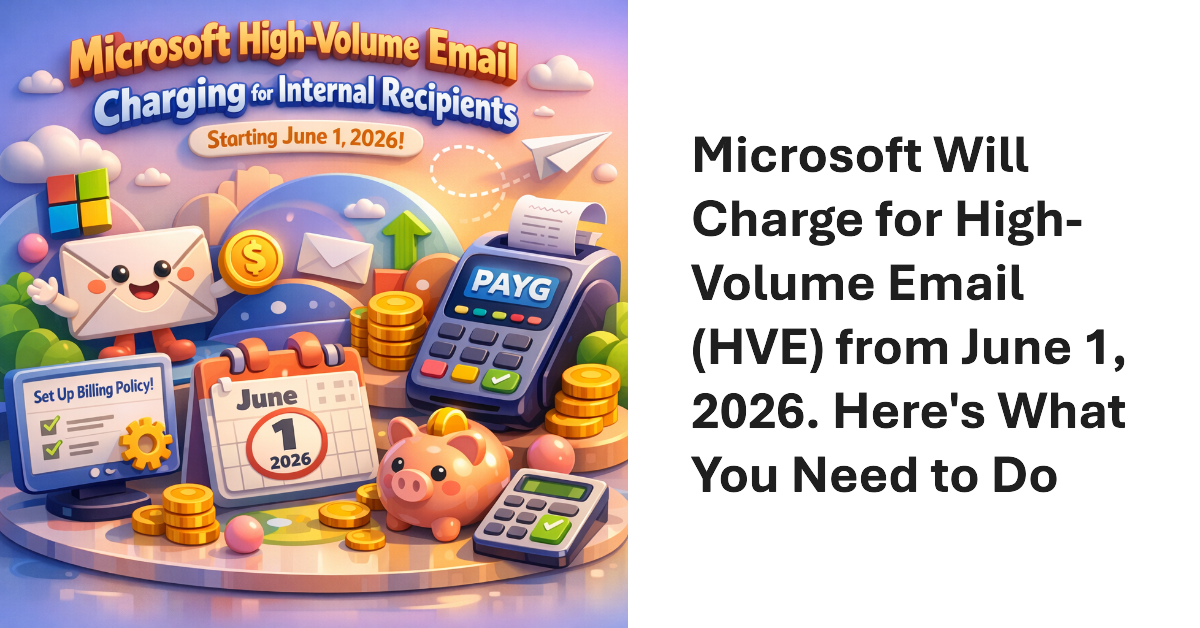
On April 1, Microsoft announced the general availability for the High-Volume Email (HVE) solution together with details of the PAYG charges incurred to send email to internal recipients, which is all that HVE can do. Microsoft will enable HVE charging on June 1, 2026, Before then, you’ll need to create a billing policy and link it to a valid Azure subscription if you want to continue to use HVE.
Almost two years after it first previewed, Microsoft is making the High-Volume Email (HVE) solution generally available in March 2026. HVE runs on a pay-as-you-go basis, but Microsoft won’t start charging tenants for sending email until May 2026. Two months should be enough for people to decide if they want to use HVE for internal communications as it has no ability to send external email.
Outlook Newsletters are intended for internal communications, at least for the preview. It’s possible to take the HTML for a newsletter and send it with Azure Email Communication Services (ECS), the PAYG service for bulk email. It sounds like a good way to use Outlook Newsletters to share information with customers and other external recipients. Some manual intervention makes everything works. It would be great if Microsoft tweaked Outlook to remove the rough edges.
HVE and ECS are two competing Microsoft Cloud Email Services. At least, they seem to compete. In reality, HVE and ECS serve different target audiences. HVE is all about internal email services for apps and devices while ECS is for high volume external mailings like customer newsletters. We tested both services by sending subscription reminder notifications to Office 365 for IT Pros readers.
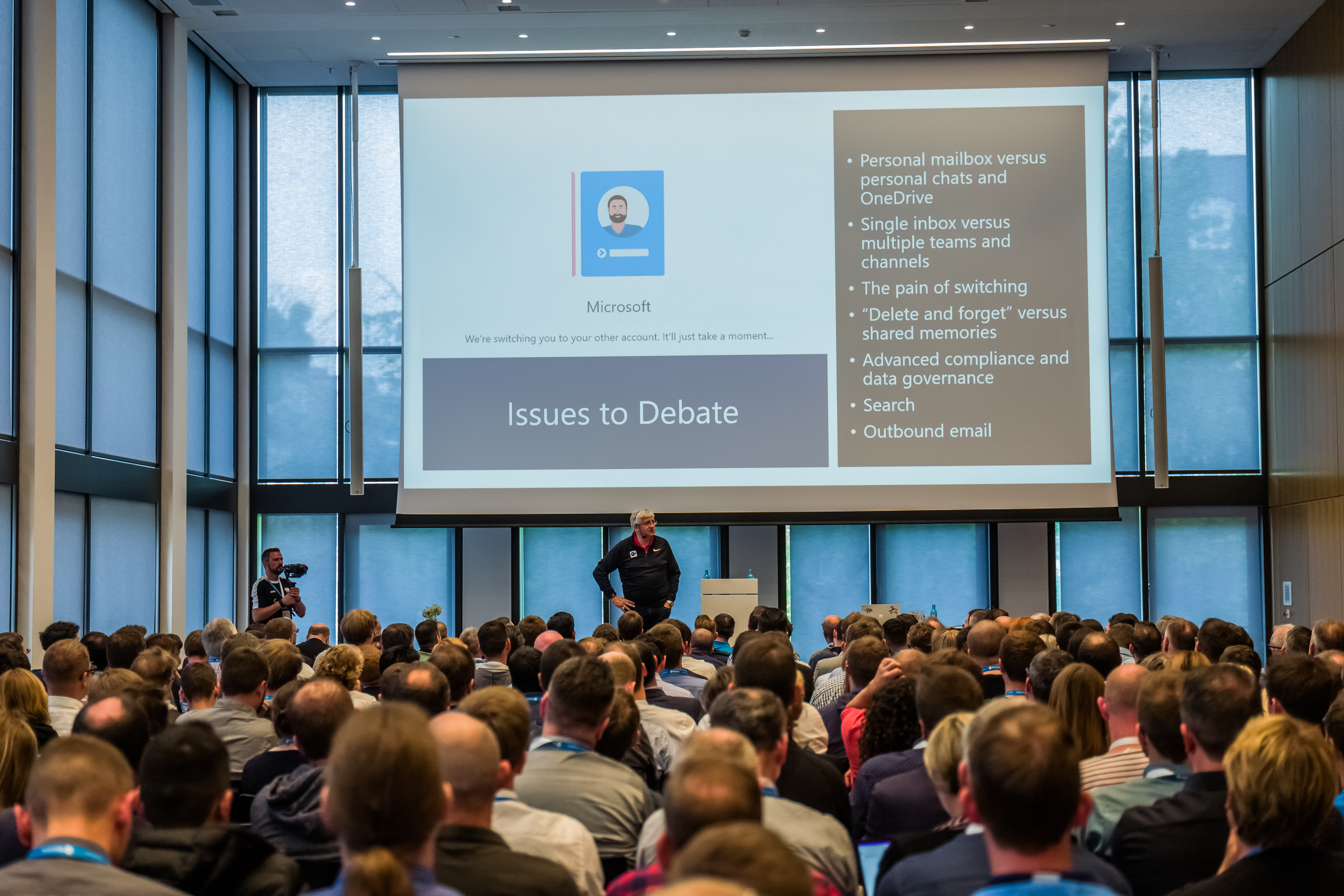
The Office 365 for IT Pros team will be at the European Collaboration Summit (ECS) in Dusseldorf. Come to listen to Tony talk about sensitivity labels on Tuesday or Paul discuss tenant to tenant migration on Wednesday. ECS is a great community-led event that’s well worth attending if you find yourself in Europe and have the ability to travel to Germany. Don’t forget your mask!
Tickets for the European Collaboration Summit 2019 are now on sale at EUR160. That’s a great price for a 3-day conference. The 2018 event was good, but the agenda needs to be rebalanced to reflect more of Office 365.