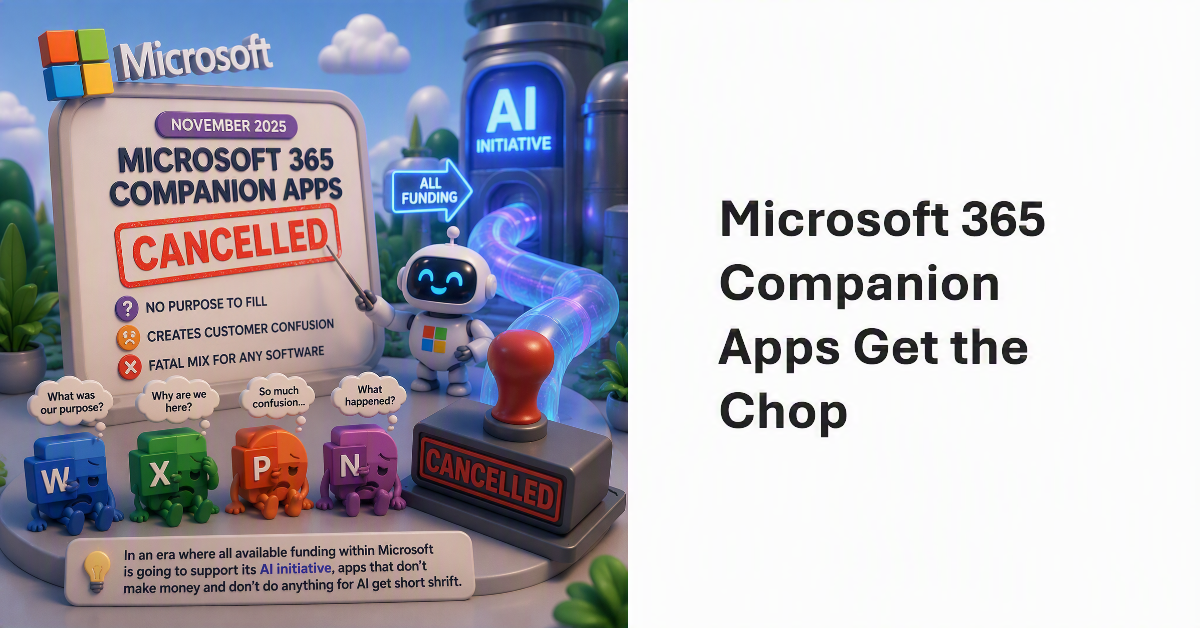
Microsoft launched the Microsoft 365 companion apps in November 2025 and now they have cancelled the apps. No obvious purpose or need for the apps and customer confusion is a fatal mix for any software to fight against, especially during an era when Microsoft is trimming engineering costs to free up investment for priority projects (mostly AI). The companion apps might have set a new record in terms of the shortest Microsoft 365 app lifetime.
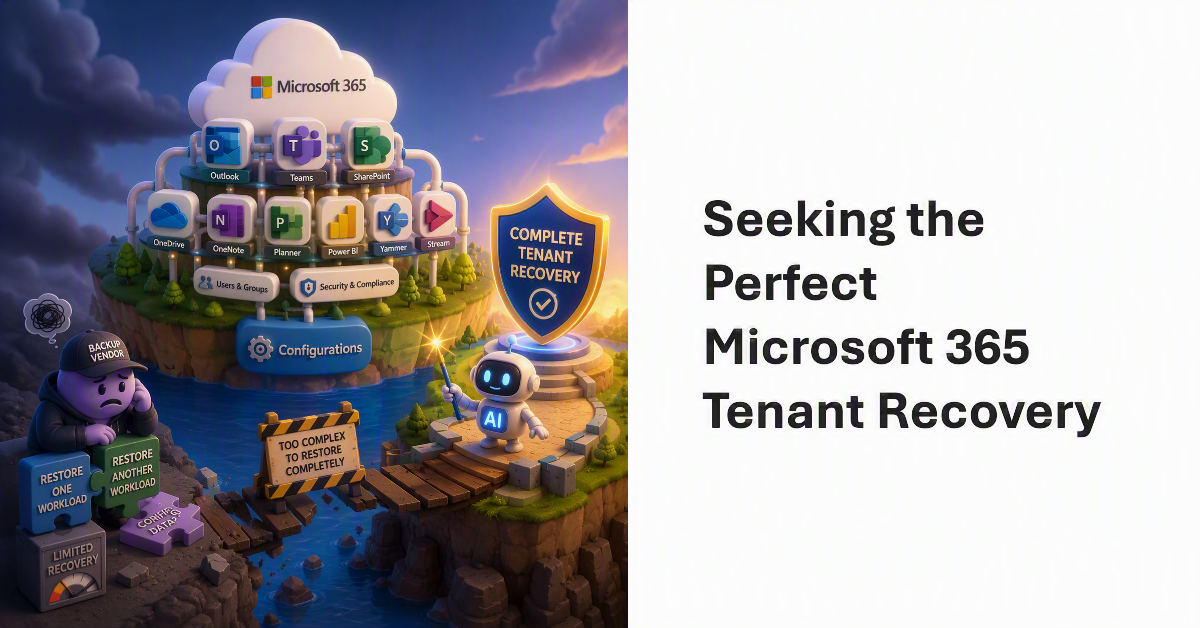
Backup vendors sell on their ability to restore data. Usually, recovery covers one or two workloads and ignores configuration data. But Microsoft 365 tenants become more complex over time as workloads meld together and configurations become more complicated. The need to be able to recover a complete tenant is more obvious than ever before, but no vendor appears willing to take on the challenge, even with AI assistance.
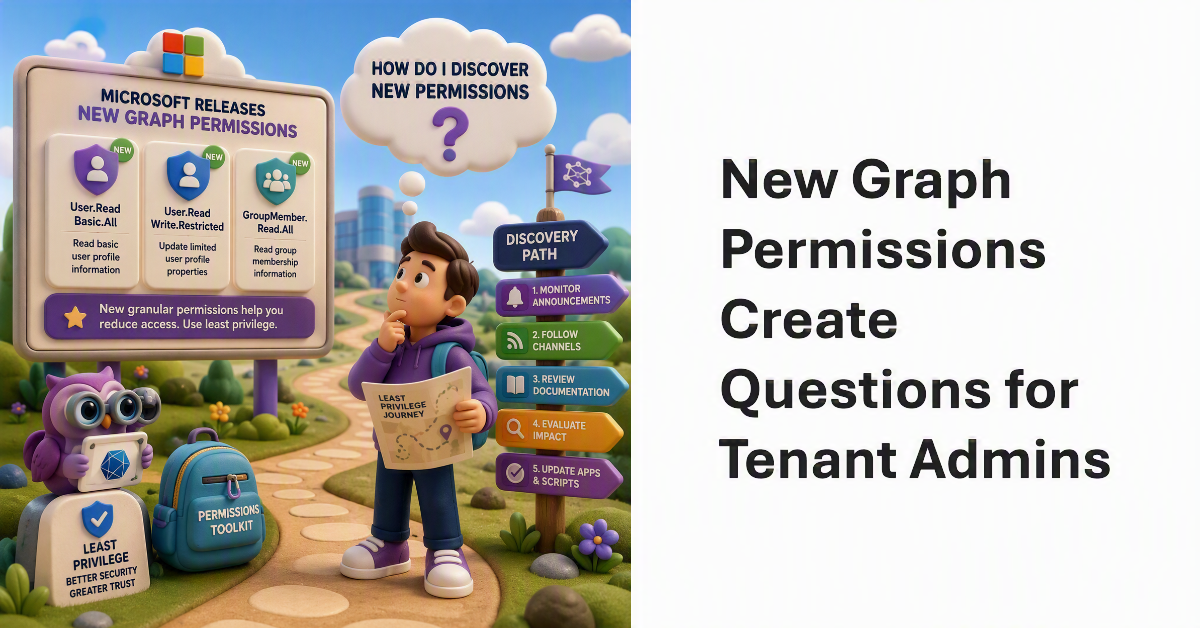
Microsoft issues new granular Graph permissions on an ongoing basis. That’s good, but only if tenants use the permissions to replace wider permissions in apps and scripts. Three new permissions recently became available, including two to reduce what apps can do with user account objects. The question is how to discover when Microsoft releases new permissions so that a decision can be made whether to use the new permissions.
A recent Reddit thread asked the very good question whether Microsoft 365 is now so complex that no single person can understand the ecosystem. There’s no doubt that Microsoft 365 is much more challenging to manage today than ever before. More features, more functionality, more settings, and more updates create an ever-changing environment that’s interconnected in many different ways. What would executives do if their tenant administrator left?
On July 29, Microsoft released their FY26 Q4 results. We learned that Microsoft 365 Copilot has 30 million paid seats, but that’s still less than 7% of the Microsoft 365 installed base, so there’s lots of room for Copilot to grow. Microsoft didn’t provide a number for Teams monthly active users, which is strange because no new data has appeared for 11 quarters. Among all the numbers, one thing’s for sure. The Microsoft Cloud makes lots of money.
Testing Microsoft 365 scenarios often involves test data. If the data is stale or always the same, it might not generate good results or help to identify lurking problems. The M365Mutator app helps to solve the problem by mixing things up in your test data. The app can change properties of Entra ID accounts, send email, update calendars, and generally make sure that whatever you’re testing has fresh information to run against.
Microsoft’s People Skills service can use AI to attribute 16,000 different skills to users. Those skills show up on the user profile card. However, once a Microsoft 365 tenant enables People Skills, they lose the ability to add custom skills for user profiles via Graph APIs or People Connectors. It’s a curious situation where Microsoft blocks custom additions because its AI-powered service is active. Couldn’t both exist alongside each other?
Now rolling out to Microsoft 365 tenants is the ability to update user profile cards with details of awards and certifications held by users. Usually this would be done through a Copilot connector, but it’s possible to add awards and certifications using Microsoft Graph PowerShell SDK cmdlets. All explained in great detail with working examples here.
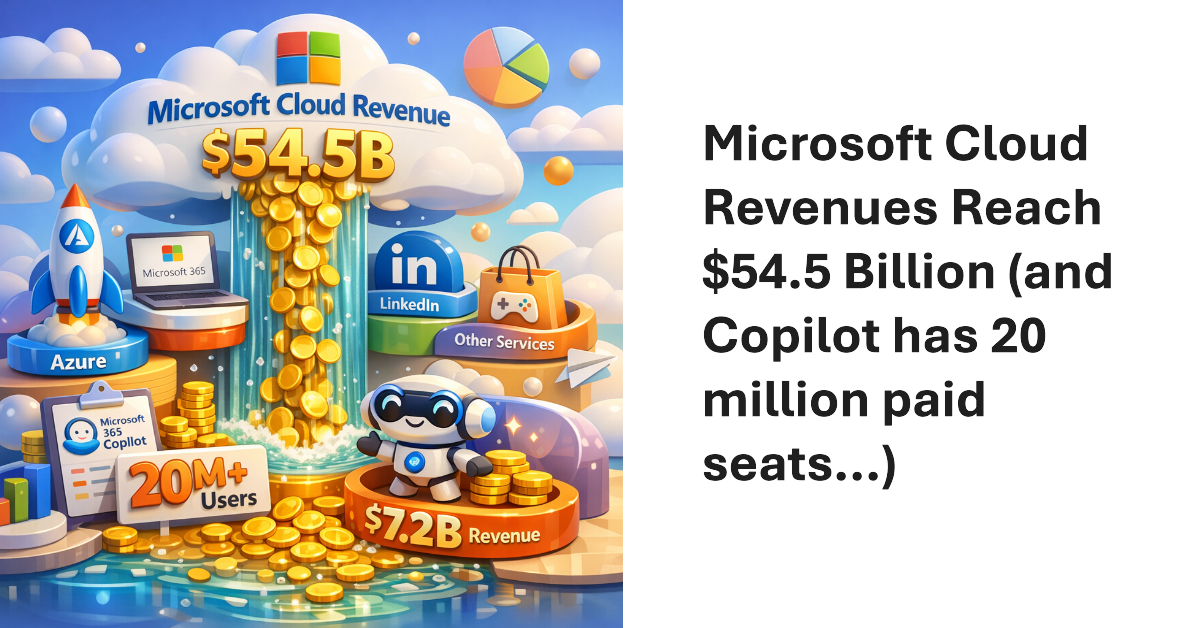
Microsoft’s FY26 Q3 results produced $54.5 billion revenue for the Microsoft Cloud, the segment that includes Microsoft 365, Azure, LinkedIn, and other services. The annualized run rate of $218 billion proves just how vital these revenues are to Microsoft. Lots of time was spent talking about Microsoft 365 Copilot, which now has “over 20 million” paid seats. Sounds good, and it’s up five million from the last quarter, but Copilot still has a long road to travel to profitability.
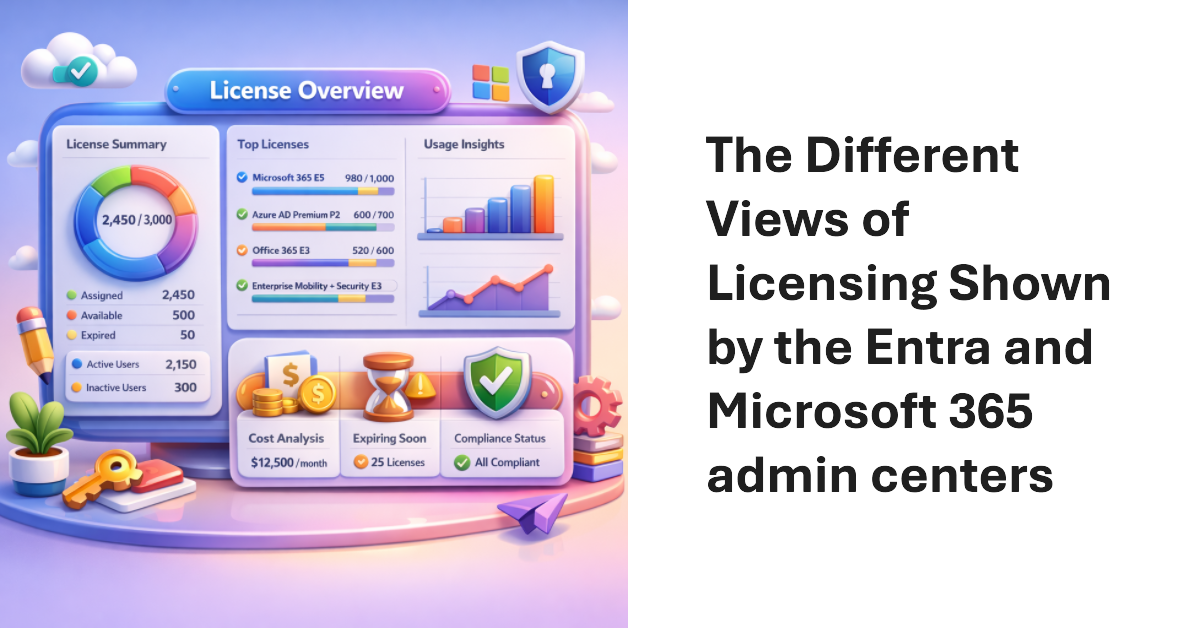
License insights is a new feature in the Entra admin center. The Microsoft 365 admin center also shows some license insights in a dashboard card. The two views don’t line up. This isn’t very surprising because different teams generated the information, but it would sure be nice if Microsoft delivered comprehensive license reporting for Microsoft 365 tenants, including the Entra premium licenses.
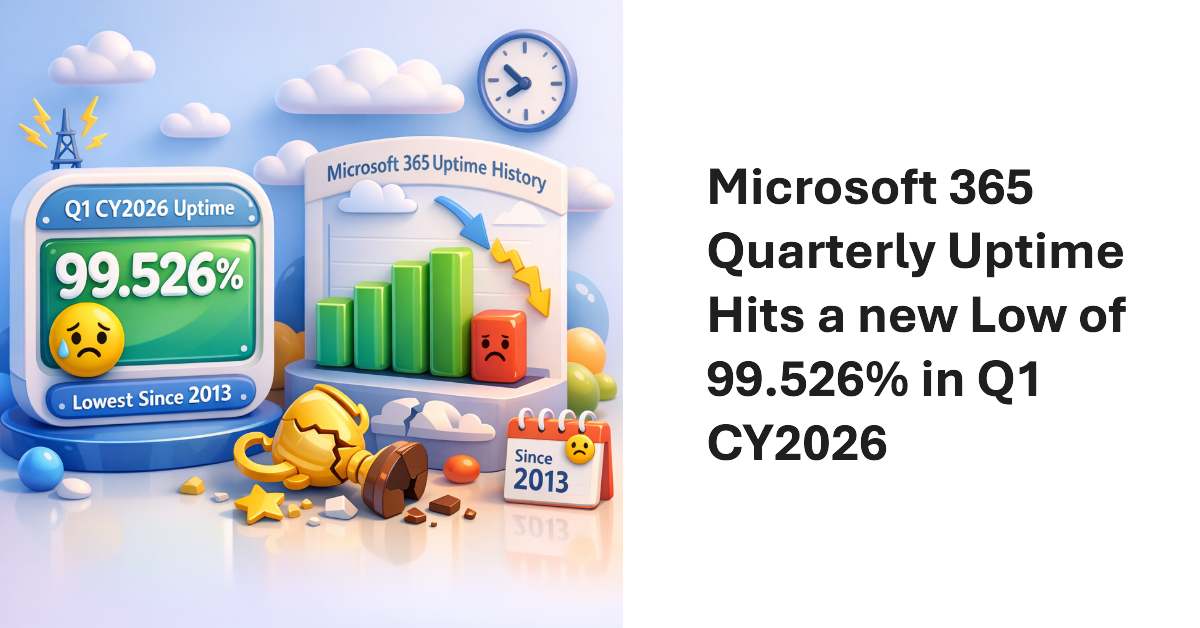
According to Microsoft, the Microsoft 365 uptime performance for Q1 CY2026 was 99.526%. That’s the lowest uptime figure since we started to record data in 2013. The first thing that people might ask is whether this performance means that Microsoft has to pay out under the terms of its financially backed SLA. The answer is no. All explained in the article.
The Microsoft 365 Connector for Claude allows Claude to access SharePoint and OneDrive files, emails, and Teams chats and meetings. The connector is now available to all users, including the free tier for Claude. Installing the connector creates two Entra ID enterprise apps (MCP server and client) and channels Graph requests to Microsoft 365 to fetch information for processing by Claude. Is that a good thing?
Microsoft disclosed that Entra ID login events were missing from Microsoft Defender for Cloud Applications for nine months — and waited more than three months after the fix to tell customers. Here’s why that matters and what you should do about it.
If installed into a MIcrosoft 365 tenant, ChatGPT Enterprise apps can access SharePoint Online files, Exchange Online email and calendar, and Teams chats, messages, and tasks. The Entra ID apps created by ChatGPT have the necessary permissions to access information accessible to the signed-in user. Microsoft 365 Copilot can access more information, but being able to process files, emails, calendar items, and chats and channel conversations delivers access to a lot of Work IQ.
Some Microsoft MVPs have expressed a strong opinion that Microsoft isn’t doing enough to develop and enhance the Microsoft Graph APIs across Microsoft 365. Problems include inconsistency in implementation, undocumented APIs, assembly clashes, missing coverage, and APIs that never come out of beta. It seems like Microsoft doesn’t dedicate sufficient attention to this important topic. What do you think?
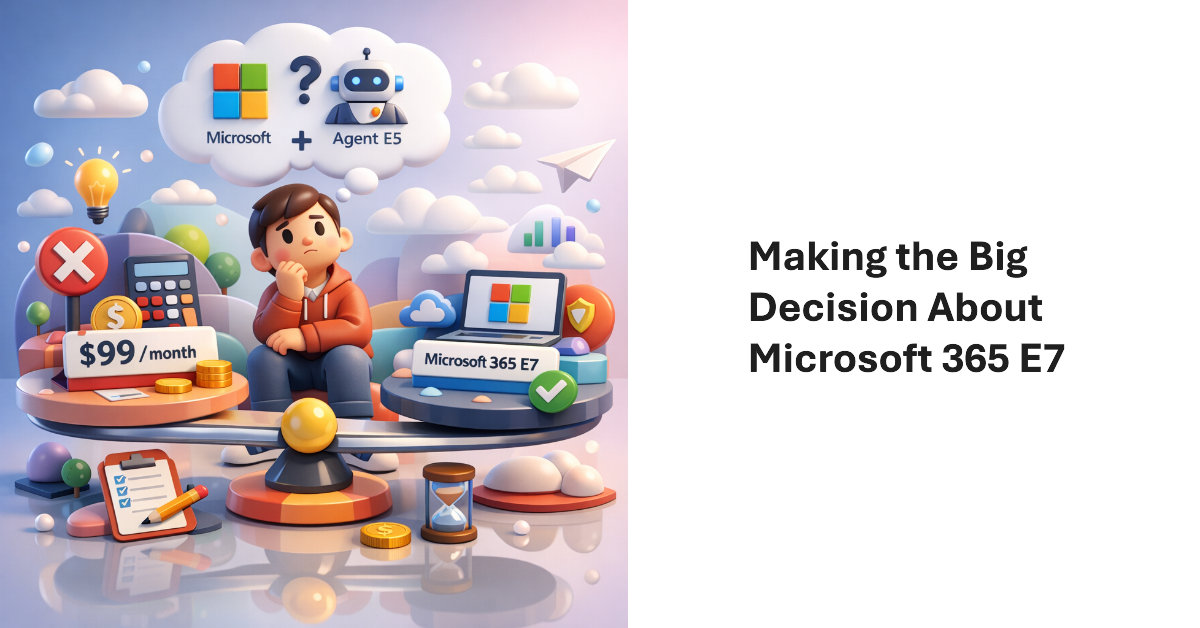
Microsoft 365 E7 bundles Microsoft 365 E5, Microsoft 365 Copilot, the Entra Suite, and the new Agent 365 into a $99/user/month SKU. The big question is whether investing in Microsoft 365 E7 licenses make sense for tenants? Buying a big batch of licenses will simply throw money away unless those licenses can be used. Paul Robichaux debates the issues and suggests some advice about how to assess the need for E7.
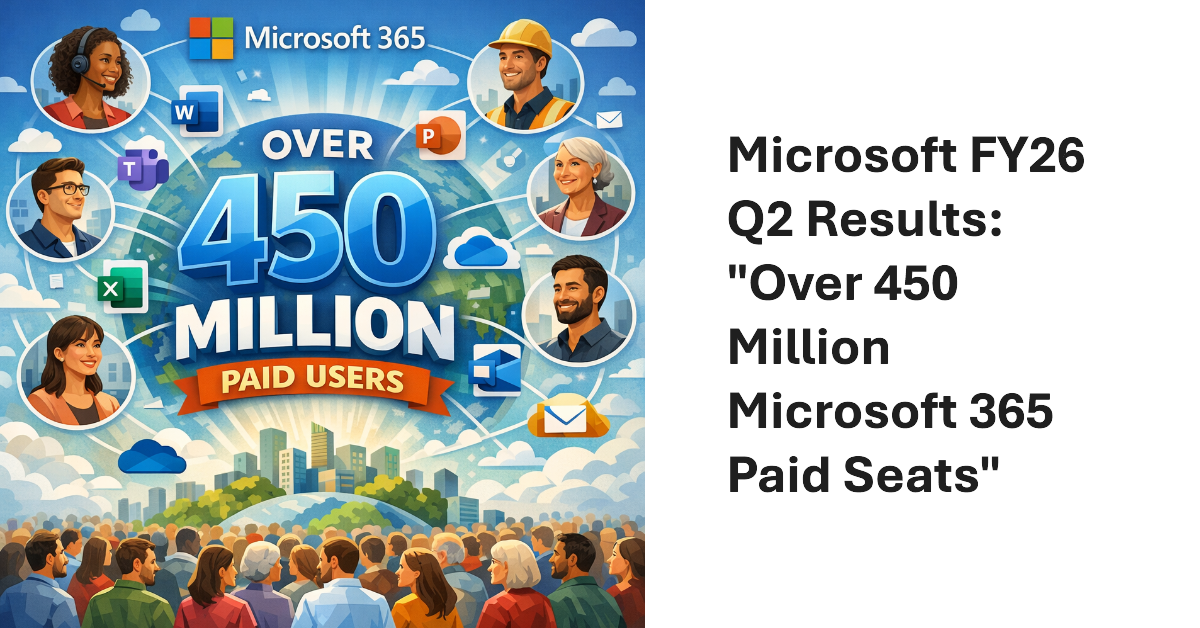
Microsoft FY26 Q2 results included a new figure for Microsoft 365 commercial paid seats: “over 450 million.” Seats are growing at a consistent 6% year-over-year rate, and the June 2026 increases will mean an extra $10 billion or so revenue. In other news, we learned that Microsoft 365 Copilot has 15 million paid seats, or roughly 3.33% of the Microsoft 365 installed base.
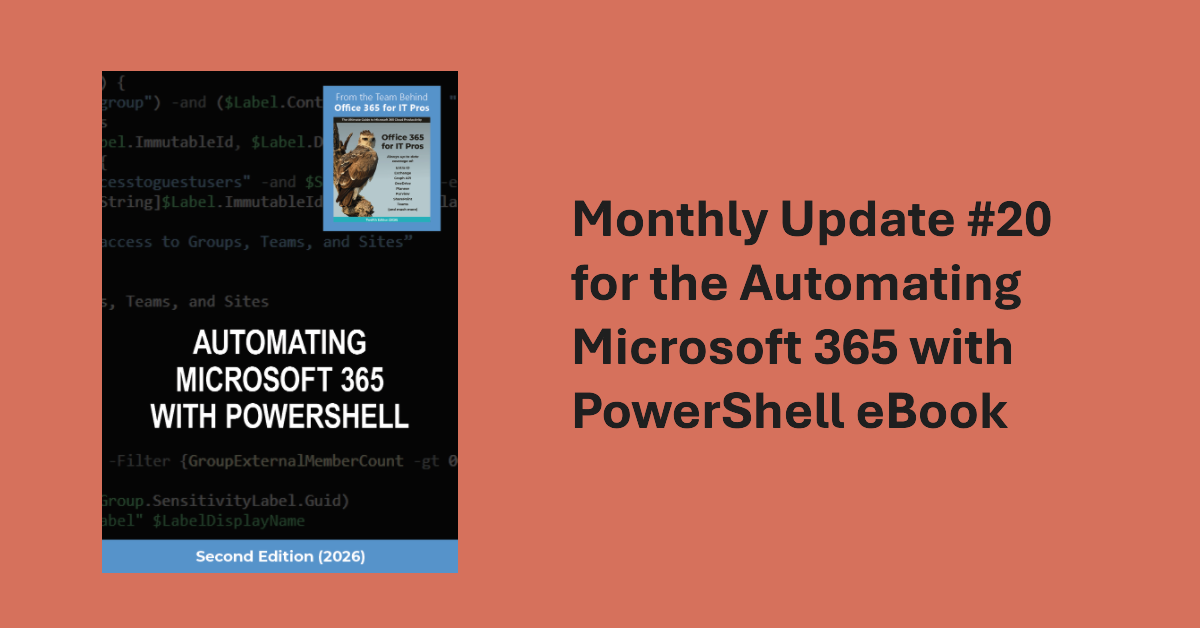
Monthly update #20 for the Automating Microsoft 365 with PowerShell eBook is now available for subscribers to download the updated EPUB and PDF files. Like any monthly update, #20 includes a mixture of new information, revisions, and even some bug fixes (changes to text or examples). Meantime, assembly clashes continue to be a bugbear for Microsoft 365 PowerShell modules. Microsoft should fix this problem!
Microsoft has launched a tenant-to-tenant migration orchestrator solution in public preview to migrate mailboxes, OneDrive accounts, and Teams chat between tenants. ISVs have been active in the T2T space for a long time. They probably won’t welcome the new Microsoft offering, but at least the migration orchestrator legitimizes the concept of tenant-to-tenant migration.
Microsoft has released a set of security benchmark recommendations for Microsoft 365 tenants that it calls baseline security mode. The recommendations cover authentication, file access, and Teams and the idea is that these are settings that Microsoft believes have proven their value over the years. The only criticism that you might have is about the potential clash for conditional access policies, but that’s not serious.
After the fuss around the initial introduction of the Anthrophic models into Microsoft 365 in September, we learn that Microsoft will enable access for all in January 2026. It would have been so much better had Microsoft said that they were working on the data protection arrangements with Anthrophic, but that didn’t happen. Is all well now? We’ll see in January…
The MCP Server for Enterprise is one of a set of preview servers released by Microsoft to show how MCP servers can help Microsoft 365 tenants get real work done. I’m sure things will improve, but the current state of the preview is that it can do a splendid job to answer simple questions, but once things get more complex, don’t depend on any of the PowerShell code the server generates.
Customers will see their bills increase from July 1, 2026, when Microsoft 365 pricing increases go into effect, adding up to $3/month for licenses. This is the first increase since March 2022, and it moves the baseline Office 365 E3 license to $26/month and Microsoft 365 E5 to $60/month. Microsoft justifies the increases based on the functionality and apps it delivers. Time for a licensing review!
The Ignite 2025 keynote was a marathon 150-minute event, but some interesting Microsoft 365 announcements emerged, mostly centered on AI. Microsoft is obviously focused on making AI and agents a very real part of tenant activities, so there’s new agent management and a repository among other things that will roll out in the year ahead.
Microsoft 365 Companion Apps are being deployed to Windows 11 PCs now. The apps don’t seem to add much if any value over standard Microsoft 365 apps like Outlook and OneDrive. With that thought in mind, we move to unclutter PCs by either blocking the installation of the companion apps or stopping the apps starting up to take over valuable toolbar space.
The Office 365 for IT Pros Team is happy to announce the availability of the November 2025 update. Subscribers can download the PDF and EPUB files for update #125 from Gumroad.com. In other news, we consider the lack of information provided at the Microsoft FY26 Q1 results and the quality of some reports that find their way onto the internet.
Guest account management should be a part of every Microsoft 365 tenant administrator’s checklist, unless the tenant has no guests. That’s possible but given the way that workloads like Teams and SharePoint Online create new guest accounts, the average tenant is likely to have quite a few guests. The question is how to manage guests – with Microsoft’s tools or using tenant-designed PowerShell scripts?
Microsoft 365 users see the profile card and might wonder where the information displayed on the card comes from. Entra ID is the obvious source, but the people platform that Microsoft is developing is another and could include information imported through a Copilot connector to build out a complete picture of users and contacts within a Microsoft 365 tenant. It’s early days yet, but beta code is available.
The Org Settings section of the Microsoft 365 admin center has a new People Settings section where you can choose properties for the Microsoft 365 profile card instead of using PowerShell. The kicker is that the old method of using Exchange custom properties to customize what appears on the profile card is being replaced with standard Entra ID properties. A migration is needed, and it’s easily done with PowerShell.
The Office 365 for IT Pros eBook team is proud to announce the availability of update 15 for the Automating Microsoft 365 with PowerShell eBook. The book includes extensive coverage of how to work with Microsoft 365 workloads through standard modules, Graph APIs, and the Microsoft Graph PowerShell SDK, including hundreds of practical examples over 350-plus pages. No fluff, just real-world code.
The MCP server for Microsoft Learn is available in public preview. It can be installed to allow AI agent real-time access to Microsoft documentation. The problem with any AI technology is that it depends on the accuracy of its sources. And sometimes the accuracy of Microsoft Learn is not as good as people assume, which then means that the AI responses aren’t so good.
Agent governance is the framework that allows tenants to deploy agents safely, securely, and under control. A new ISV offering from Rencore helps to fill some gaps in Copilot agent governance that currently exist in what’s available in Microsoft 365. It’s good to see ISV action in this space because the last thing that anyone wants is the prospect of Copilot agents running amok inside Microsoft 365 tenants.
Recent problems with Microsoft 365 PowerShell modules afflicted the ability of Azure Automation runbooks to execute cmdlets Microsoft Graph PowerShell SDK and Exchange Online Management modules. The root cause is a decision to remove support for .NET6, but the worrying point is the lack of awareness within Microsoft engineering that Azure Automation is where many critical scripts run. Better pre-release testing is definitely needed.
On June 16, Microsoft announced European sovereign solutions, including a new offering called Microsoft 365 Local that has nothing to do with Microsoft 365 apart from the need to connect to Azure from time to time. Microsoft 365 Local is an on-premises packaged solution. There’s nothing bad about that because some companies need to run on-premises servers for their own reasons. But calling it Microsoft 365?
People Skills is a new Microsoft 365 solution that uses AI to determine what skills are possessed by users based on their profile and activities. The skills recorded for users turn up on the Microsoft 365 profile card, just like the older SharePoint/Delve implementation. Is this an example of more AI being used “just because we can” or a useful solution? It’s up to you to decide.
The AI-based generative summaries featured by Google and other search engines remove organic traffic from technology websites and make it less attractive for content creators to write about new topics. The upshot is likely to be a decrease in the amount of new knowledge shared on public websites and a resultant lack of information for the AI LLMs to feed off.
An OWA mailbox setting is available to block PST access for the new Outlook for Windows client. The setting mimics controls available for Outlook classic, where companies have been blocking PST access for a long time. Once email is in a PST, it’s invisible to any of the compliance solutions that organizations pay for. It’s also invisible to Copilot, which might not be a bad thing…
A recent post revealed that the Mailbox Import-Export Graph API doesn’t capture audit events for its operations. The API is in beta, but this is disappointing. Auditing any mailbox is important, but it becomes a critical requirement when the possibility exists that attackers could use the API to exfiltrate mailbox data outside of the tenant. This is a hole that Microsoft needs to close.
A set of 80 mysterious SharePoint Embedded containers turned up because Microsoft pre-provisioned storage for files used as knowledge sources by Copilot agents. Details of the pre-provisioning are in message center notification MC1058260, but who has the time to read and analyze everything posted to the message center? And anyway, the mysterious containers have now disappeared…
The June 2025 update for the Automating Microsoft 365 with PowerShell eBook is now available. Coding automation with Microsoft 365 PowerShell can be challenging, but not with this book beside you. It contains hundreds of examples of working with Entra ID, Exchange Online, SharePoint Online, OneDrive for Business, Teams, and Planner using regular PowerShell cmdlets and the Graph APIs.