Paul Robichaux and I led a session about Microsoft 365 Compliance at the European SharePoint Conference in Dublin on December 2, 2025. During the session, we discussed how intelligent versioning works and its value in saving storage, priority cleanup and its ability to delete files even if the files are under retention hold, and the recent revamp of the Purview eDiscovery solution. We were thrilled at the attendance. Here’s what happened.
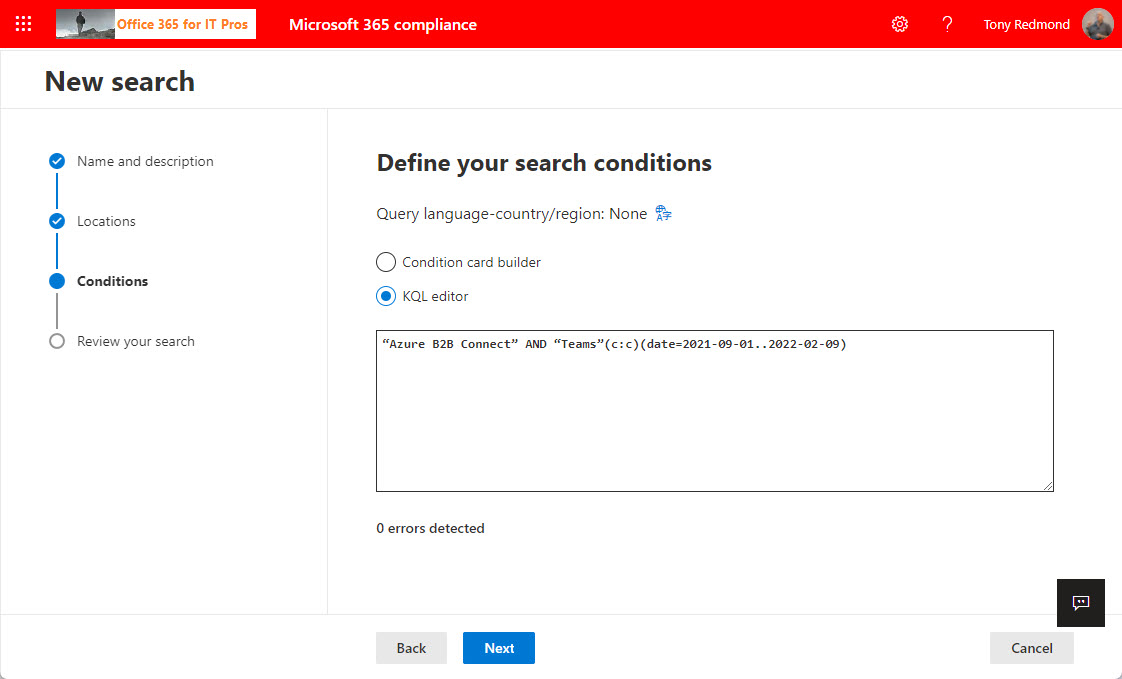
The KQL editor is a relatively new feature in Microsoft 365 that makes it easier to compose queries to find email and documents in content searches, core eDiscovery, and advanced eDiscovery. Although it’s not perfect, the KQL editor helps compliance managers to perfect queries and resolve syntax errors. Human intelligence is still needed to make sure that everything works!
Microsoft plans to surface recommendations to use communications compliance policies as part of its DLP workflow. That sounds acceptable, but it’s the second example of how Microsoft pushes high-priced premium features to Office 365 tenants through DLP. Apart from the undesirability of pushing features to customers through software, communications compliance is not something that you implement on a whim, so why does Microsoft think this is a good idea?
Licensing is everyone’s favorite topic. Combine it with information protection and governance and peoples’ eyes glaze over. Even so, it’s important to know what information protection and compliance features need which licenses as you don’t want to get into a position where something stops working because Microsoft enables some code to enforce licensing requirements. This post covers the basics of licensing and how Microsoft differentiates between manual processing and automated processing when deciding if a feature needs a standard or premium license.
Microsoft has released information about high-value Office 365 audit events and audit event retention policies. Both are part of a Microsoft 365 Advanced Audit offering. The MailItemsAccessed event is the first high-value audit event (we can expect more) and the retention policies are used to purge unneeded events from the Office 365 audit log.