Tenants with Microsoft 365 Archive configured can incorporate an archiving step in how Purview retention policies and labels process SharePoint Online and OneDrive for Business files. It makes perfect sense to move inactive files to lower-cost archive storage as an intermediate point some time before their final deletion. You’ll save on storage and stop AI tools processing the digital debris that invariably accumulates in SharePoint.
Microsoft Purview supports retention policies for Planner tasks and that’s the supported way to remove old tasks from plans. But you can also remove old Planner tasks with PowerShell. Just for fun, we show how to find and delete old tasks using the Microsoft Graph PowerShell SDK. Cleaning out obsolete tasks that have been hanging around plans for years speeds up client access. It’s a form of colonic irrigation for plans!
From next month, Microsoft 365 tenants can apply retention policies to Planner Tasks. We began our preparation to create a retention policy for Planner tasks by writing some PowerShell to test the likely effect of retention. The code scans Microsoft 365 Groups for groups with plans and checks each plan for tasks that would be removed by a retention policy. It’s amazing what some PowerShell can do…
Intelligent versioning recently appeared in SharePoint Online. The purpose is to save storage by removing unnecessary versions. But retention policies and labels can stop the removal of versions. This article explains what happens when SharePoint Online attempts to trim (remove) unwanted versions of files under the control of retention policies and labels.
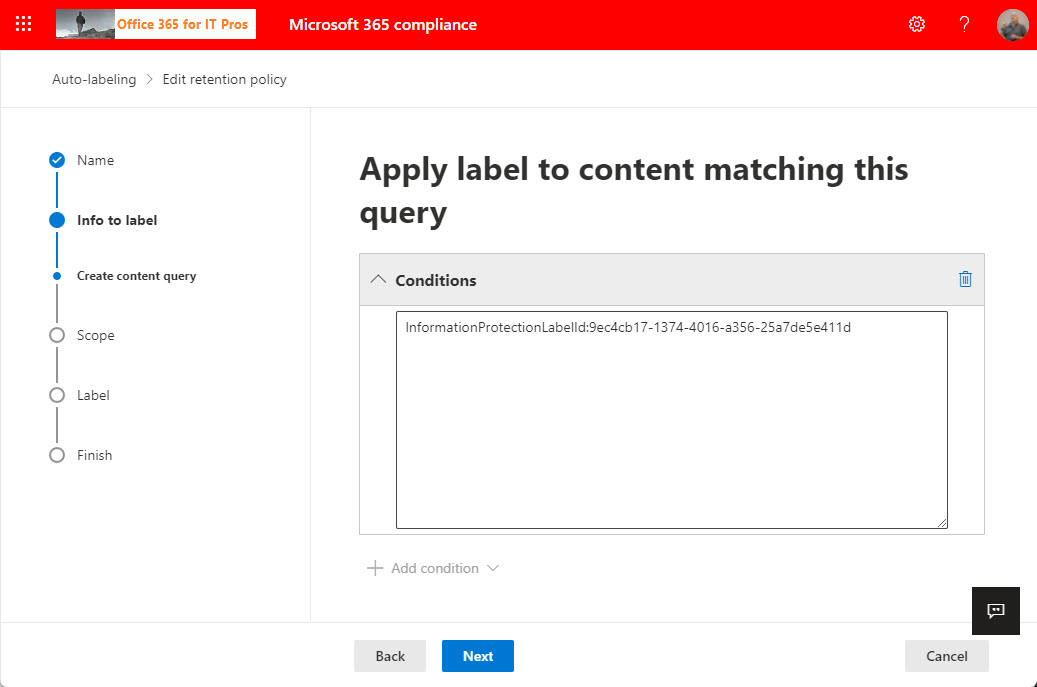
Auto-label retention policies find items in Microsoft 365 locations and apply retention labels to those items. In this article, we explain the steps involved in creating an auto-label retention policy to look for items with sensitivity labels and apply retention labels to those items.
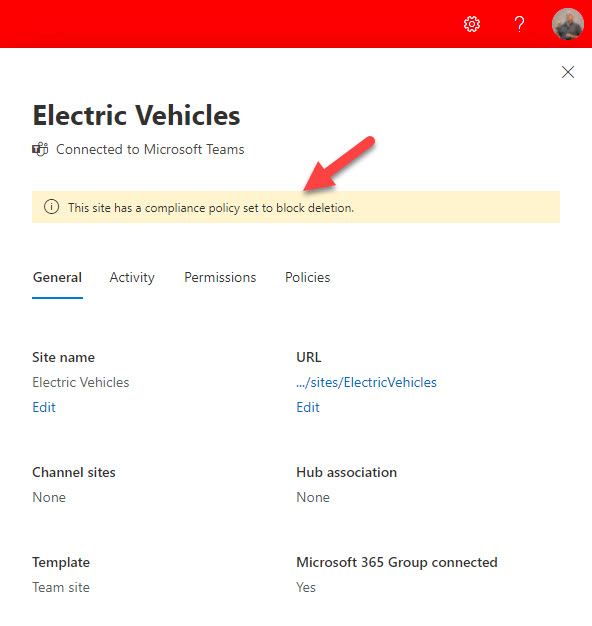
The ability to lookup a user, site, or group and report the Microsoft 365 retention policies applicable to the location is now available in preview. The new feature helps administrators understand what retention policies might block the deletion of a mailbox, site, or group, something that’s often difficult when multiple retention policies exist in a tenant. Although welcome, it would be nice if Microsoft could extend the feature to add some actions. Maybe that will come in the next version.
Most Microsoft 365 tenants will have to manage the mailboxes of ex-employees. Retention policies are an excellent method to achieve this goal, if you remember to add mailboxes to a suitable retention policy before deleting their Azure AD account. In this article, we consider Microsoft’s recommendation to use a specific retention policy for inactive mailboxes and how to go about using such a policy.
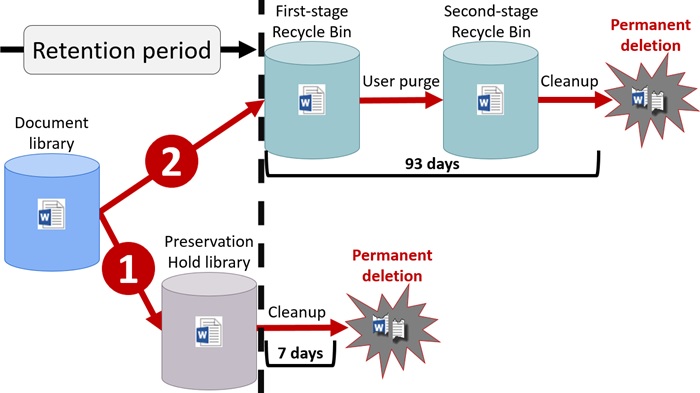
The preservation hold library is an important component of SharePoint Online retention processing. A change coming in November should simplify file handling and reduce the amount of storage taken up by retained files in the library. Basically, instead of storing multiple versions of a file, SharePoint Online will hold a single file containing all the updates. It seems like a good change to make. We’ll know more when it rolls out.
Microsoft has moved retention processing for SharePoint Online, OneDrive for Business, Teams, and Yammer from the Managed Folder Assistant to a new retention assistant. (background processing job). It’s part of an effort to use workload-agnostic processing whenever possible to perform retention actions across Microsoft 365.
Office 365 tenants will soon be able to create adaptive scopes for retention policies. An adaptive scope is nothing more than a filter to select target mailboxes, sites, and Microsoft 365 groups based on some criteria. They’re adaptive because administrators don’t have to update policies as they add new objects. Like other Microsoft 365 Information Governance features which automate some aspect of operations, adaptive scopes are likely to demand Office 365 E5 or Microsoft 365 E5 Compliance licenses.
A change being made to SharePoint Online in August will make the deletion process for files with retention labels consistent with OneDrive for Business. The intention is to achieve consistency across the two browser interfaces and to remove a little friction for users who might become confused when they SharePoint Online stops them deleting labeled files. Everything will happen in August. We wonder if anyone will notice?
Teams meeting recordings are now accumulating as MP4 files in OneDrive for Business and SharePoint Online. If you have Office 365 E5 licenses, you can use an auto-label policy to remove recordings after a set period. If you don’t have those licenses and need to remove recordings, you’ll have to come up with another plan, maybe after tracking the creation of recordings through the Office 365 audit log.
A change made to an Office 365 retention policy for Teams personal chats in the KPMG tenant removed data for 145,000 users. That’s unfortunate, and it underlines the need for admins to understand how retention policies work. Maybe the people involve did and it was a simple slip that could happen to anyone, but perhaps it will cause tenant admins to reflect on how they make changes to organization configurations.
Exchange Online allows users to add personal retention tags to their maiboxes through OWA settings. Some organizations don’t like this, so they can deploy user role assignment policies to block the feature. It;s something that you could consider doing if you’re preparing to switchover to Office 365 retention policies to impose the same retention regime across multiple workloads.
Microsoft is changing how the removal of an Office 365 retention policy affects the data held in the SharePoint Online Preservation Hold Library. Instead of an immediate purge, data will be kept for a period to allow administrators to recover it. Sounds like a good idea and it should help people rescue a situation when someone removes a retention policy in error. That is, if they notice that the policy is no longer in effect for a site.
Exchange Online supports inactive mailboxes as a way to keep mailbox data online after Office 365 accounts are removed. Inactive mailboxes are available as long as a hold exists on them. You can update mailbox properties to exclude all or some org-wide holds. If you exclude holds from a mailbox, you run the risk that Exchange will permanently remove the mailbox. If that’s what you want, all is well, but if it’s not, then you might not be so happy.
If you’re interested in deploying backups for SharePoint Online, you might be doing so to prevent data loss through accidental user deletion. However, Office 365 retention labels and policies can help prevent accidental deletion too. And the best thing is that retention policies and labels are part of Office 365 E3, so you don’t have to pay more to get protection.
The Exchange Online Managed Folder Assistant (MFA) runs in the background on a workcycle basis to make sure that mailboxes are processed at least once a week. Most of the processing involves mailbox and Office 365 retention policies and runs smoothly, but how do you know what MFA has done?