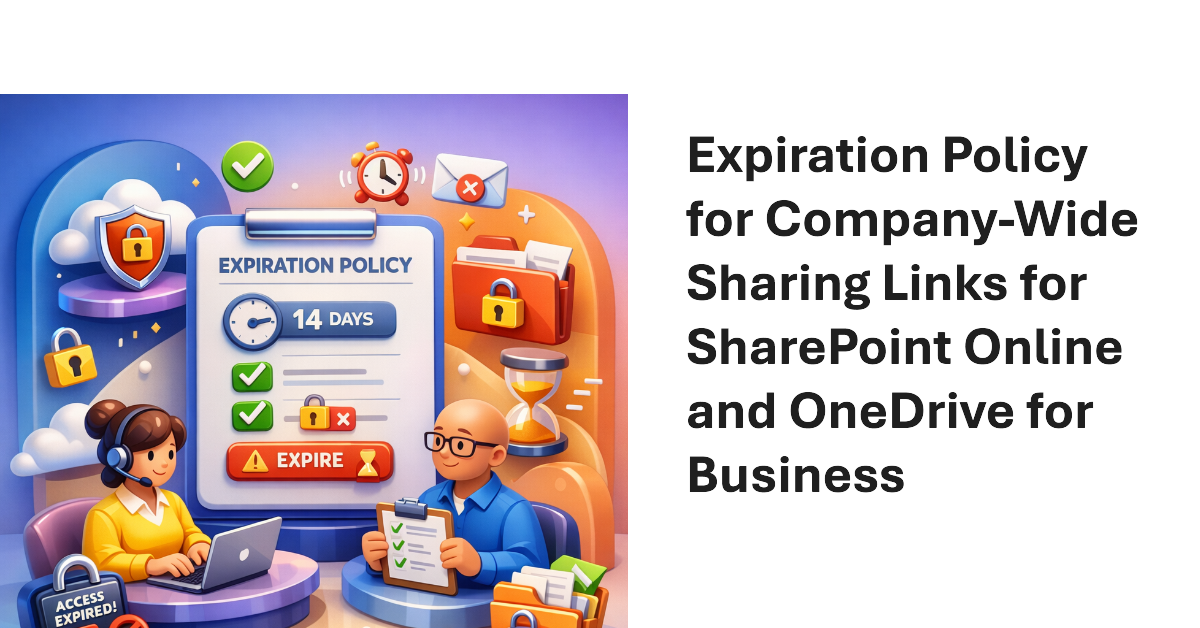
Company-wide sharing links allow any authenticated user account in a Microsoft 365 tenant to access a shared file or folder. New settings are available to create an expiration policy for company-wide sharing links, with different values supported for SharePoint Online and OneDrive for Business. The idea is to stop the potential for abuse of sharing links, including stale links that should not grant access to files and folders.
The Microsoft 365 Backup solution will soon be able to restore individual files and folders instead of complete sites. That’s a welcome upgrade to restore capabilities to cover situations like the inadvertent deletion of a file. It’s a wonder why Microsoft didn’t make more about this capability when they celebrated SharePoint’s 25th anniversary last week when they discussed departmental billing for Microsoft 365 Backup.
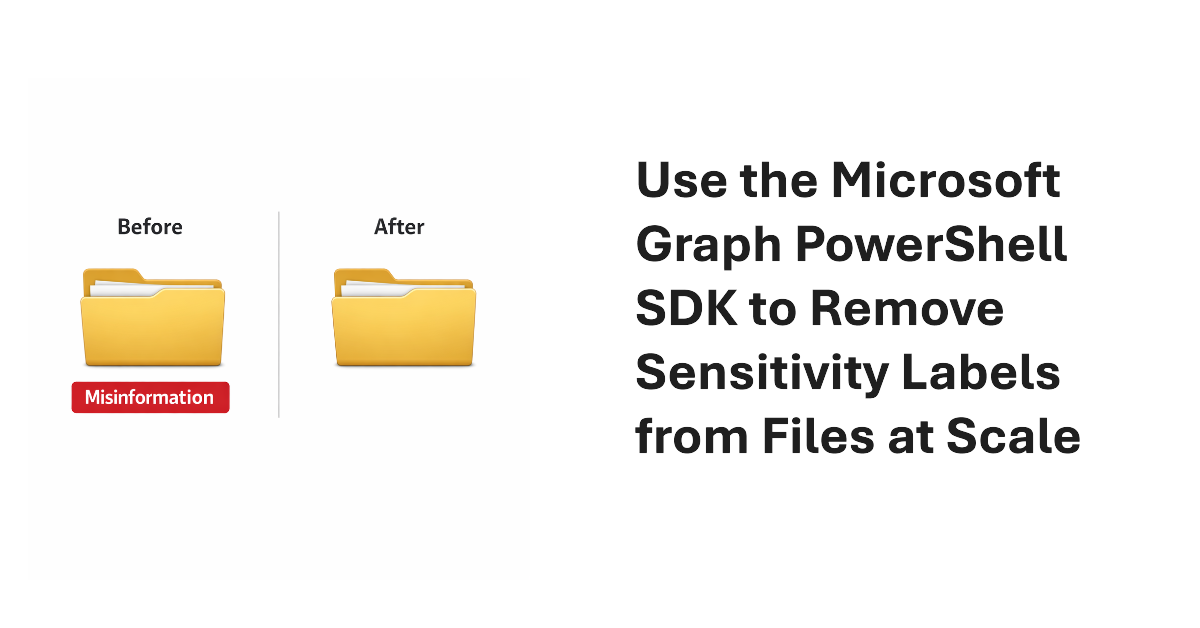
It’s easy to remove sensitivity labels from SharePoint Online files when only a few files are involved. Doing the same task at scale requires automation. In this article, we explain how to use the Microsoft Graph PowerShell SDK to find and remove sensitivity labels from files stored in SharePoint Online and OneDrive for Business.
From July 2026. SharePoint Online and OneDrive for Business will use Entra B2B Collaboration (guest accounts) to control external access to shared files. This change has been coming since 2021, but it takes time for organizations to get their heads around changing the way to grant external access. It’s time to embrace guest accounts, and that means doing some work to manage guest accounts on an ongoing basis.
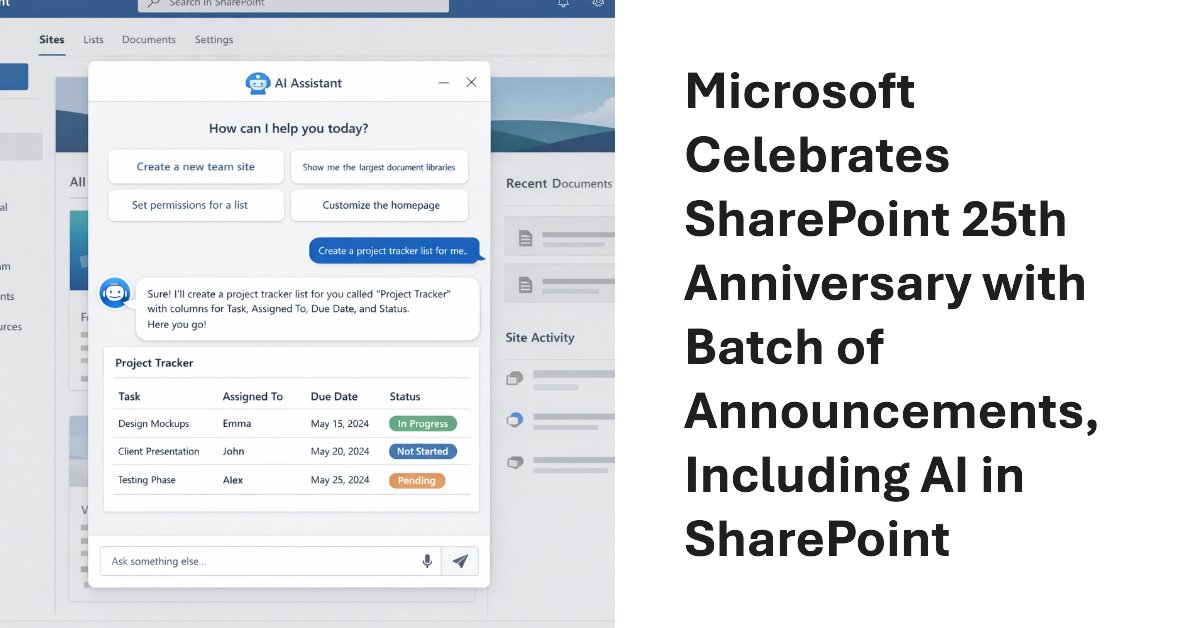
Microsoft celebrated the 25th anniversary of SharePoint with a batch of announcements, including AI in SharePoint, intended to help administrators to manage all aspects of SharePoint Online through natural language. Other interesting announcements included department-level payments for Microsoft 365 Backup and the renaming of the Connections app in Teams as the SharePoint app. Well, the last wasn’t that interesting…
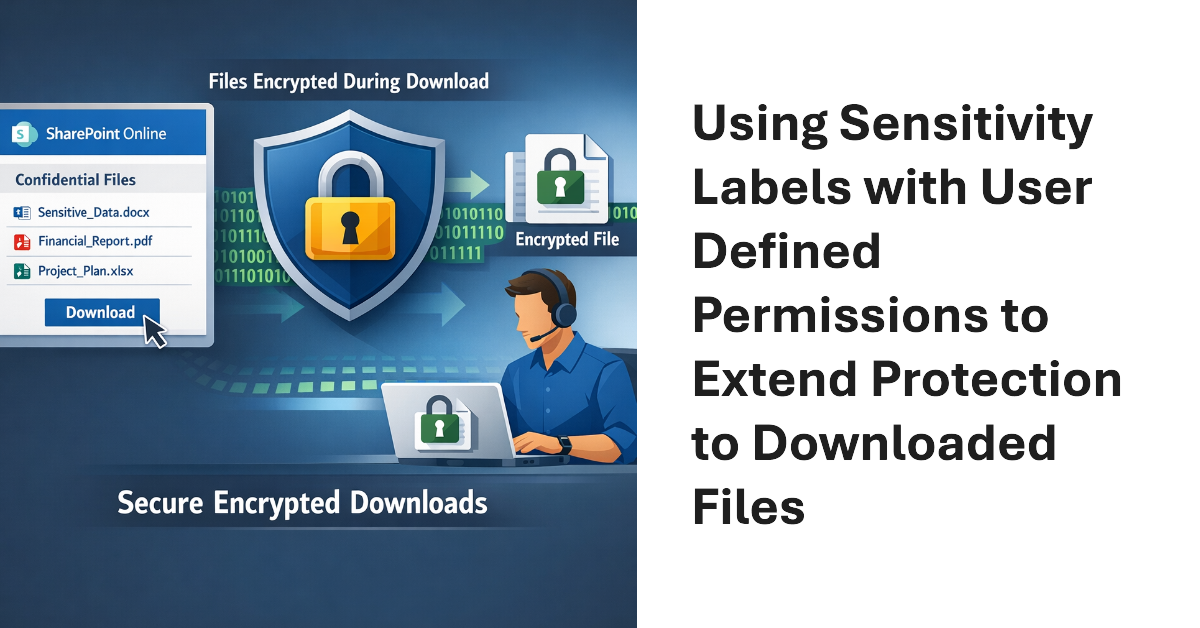
Sensitivity labels offer great protection against unauthorized access, but sometimes files that aren’t encrypted escape from a document library. SharePoint Online can now use sensitivity labels configured with user defined permissions (UDP) to extend protection to downloaded files. The magic works by configuring permissions on download based on the membership of the user who downloads a file.
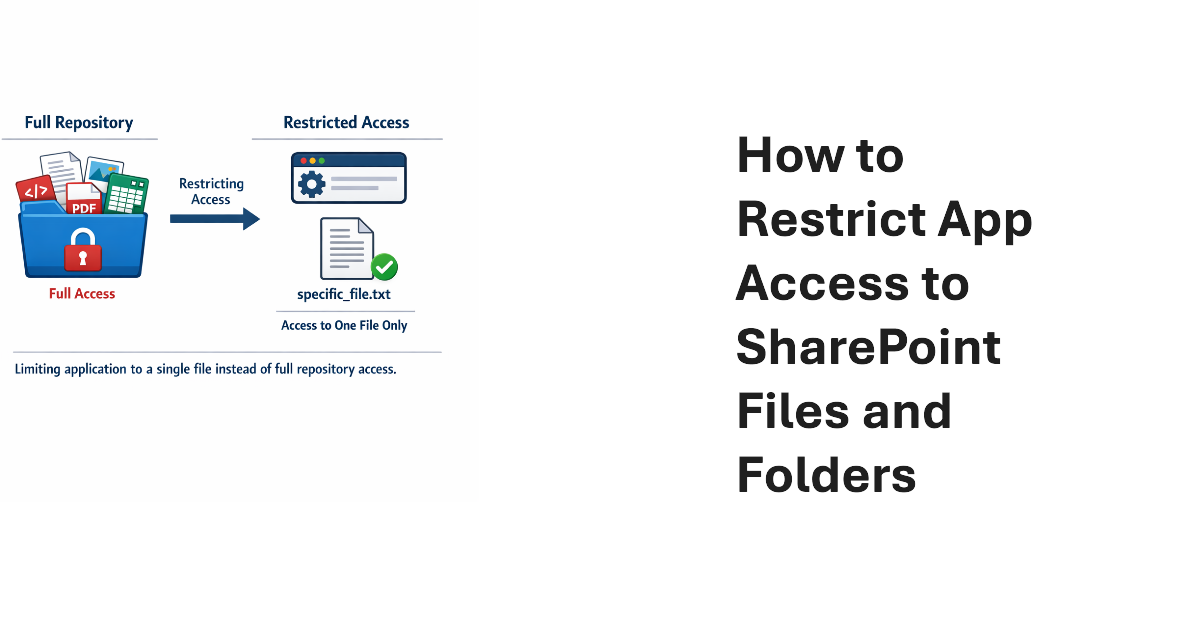
Scoped permissions grant apps granular access to files and folders in SharePoint Online and OneDrive for Business sites using the Files.SelectedOperations.Selected Graph permission. The permission allows apps to access specific files or all the files in a folder. It’s a great way to make sure that apps don’t have unfettered access to confidential documents. Not that any app would try to have that kind of access…
Microsoft released the beta version of the SharePoint Online create Site API for the Microsoft Graph in late November 2025. Since then, Microsoft has dropped one of the three site templates. Playing with the API, we’ve discovered that the API can certainly create sites but that the SharePoint Graph API misses a heap of features, like adding members to the new site. Oh well, one step forward…
Restricted Content Discovery (RCD) is a feature that blocks access by Microsoft 365 Copilot and agents to the files stored in a SharePoint Online site. Instead of relying on tenant administrators, site administrators can now enable or disable RCD. It’s a natural evolution of what is an essential feature to keep sensitive and confidential information being leaked inadvertently by AI.
MC1211579 (3 January 2026) announces the retirement of four legacy SharePoint compliance features in favor of Purview Data Lifecycle management and Records management. It’s always unsurprising when Microsoft chooses to remove old features developed for on-premises and replaces them with better online options, which is exactly what’s happening here. Some tenants might face additional licensing requirements for Purview.
Microsoft is launching version expiration policies in SharePoint Online for audio and video files. The approach is the same as used for intelligent versioning of Office files stored in SharePoint Online and OneDrive for Business and can be configured at the tenant, site, and document library level. If your tenant uses Clipchamp, this could be a way to save expensive SharePoint storage.
Paul Robichaux and I led a session about Microsoft 365 Compliance at the European SharePoint Conference in Dublin on December 2, 2025. During the session, we discussed how intelligent versioning works and its value in saving storage, priority cleanup and its ability to delete files even if the files are under retention hold, and the recent revamp of the Purview eDiscovery solution. We were thrilled at the attendance. Here’s what happened.
The latest versions of the SharePoint Online PowerShell module support app-only authentication (certificate-based authentication) for the Connect-SPOService cmdlet. In other words, applications can now connect to SharePoint Online to run administrative cmdlets by presenting a registered Entra ID app and an X.509 certificate instead of the credentials for a human SharePoint administrator. It’s a good change, even if I still prefer using the Graph APIs for SharePoint automation.
In January 2025, Microsoft changed the SharePoint folder location to store copies of the email sent to Teams channels. Apparently, this update improved security, but it’s unclear exactly how the improvement comes about unless through obscurity. In any case, we missed this change completely and are publishing this note to remind everyone else of the importance of reading message center posts.
The site attestation policy is designed to require site owners to make a positive statement that the settings of their site, including its current membership, are accurate. The idea is that requiring site owners to attest that their site is still needed will force people to decide whether sites are still in active use and should be kept online. If not, the policy can move the sites into Microsoft 365 Archive.
OpenAI has launched a ChatGPT enterprise SharePoint Connector that allows organizations to synchronize files from SharePoint Online to ChatGPT. I could never understand why Microsoft 365 tenants allowed users to upload individual files from SharePoint or OneDrive to ChatGPT for processing. Using a connector to synchronize entire sites to ChatGPT makes even less sense, especially from a compliance perspective. I must be missing something!
An update for Chromium 141 can affect the ability of SharePoint Online and OneDrive for Business to access offline content, including files and lists and lead to degraded performance. The change is designed to improve user privacy, but some Microsoft 365 apps need browsers to be able to access local files, notably for OneDrive synchronization. Prepare by upgrading the OneDrive Sync client and distributing a new policy to workstations.
What’s the best way to find SharePoint sites with the Microsoft Graph PowerShell SDK? Is the Get-MgAllSite cmdlet best or should you use the Get-MgSite cmdlet? Does it matter if you’re looking for one site or many sites? We explore the issue in this article by examining some reasons why you’d choose Get-MgSite and others that drive the decision for Get-MgAllSite.
With not a little hype, Microsoft launched the SharePoint Knowledge Agent on September 18. Getting some AI help to organize sites sounds good, but only if the assistance delivered by the artificial intelligence does something useful. In this case, the agent generated some moderately interesting results without ever reaching the level of AI magic anticipated (and reported) by some.
Microsoft 365 Copilot now has some SharePoint skills to deploy in the SharePoint admin center. The problem is that the skills aren’t very good and don’t do much to help hard-pressed SharePoint Online administrators cope with the vast explosion of sites that exist in many tenants today. The problem is data. If Copilot doesn’t have the information to reason over, it can’t answer questions or give advice.
A new SharePoint Site content and policy comparison report is available to tenants with Microsoft 365 Copilot or SharePoint advanced management licenses. The idea is that you choose some reference sites to compare other sites against to detect deviations from the reference site. It seems like a good idea if you’re trying to impose standards to control Copilot. Unhappily, attempts at running the report turned up zero results.
Finally, Microsoft solved the technical issues that blocked SharePoint Online support for sensitivity labels with user-defined permissions (UDP). The feature is now generally available and it’s very welcome because support opens access for Office files and PDFs with UDP labels for search and Purview solutions like DLP and eDiscovery. Files with UDP labels applied prior to GA are not processed until they are edited, but that’s reasonable.
After July 1, 2025, any sharing links generated with one-time passcodes (OTP) will stop working. Only links based on Entra ID B2B Collaboration will work. Users who lose access to content shared from SharePoint Online or OneDrive for Business will have to contact the original sharer to ask them to generate a new sharing link. Sounds like a recipe for confusion, which is what might happen.
An article by a company specializing in penetration tests raised some questions about how attackers might use Copilot for Microsoft 365 to retrieve data. The article is an interesting read and reveals how Copilot can reveal data in password protected Excel worksheets. However, many of the issues raised can be controlled by applying available controls, and the biggest worry is lhow the account being used to run Copilot came to be compromised!
At Ignite 2024, Microsoft said that Copilot for Microsoft 365 tenants would benefit from SharePoint Advanced Management (SAM). What does that mean? Well, it doesn’t mean that Copilot tenants get SAM licenses, which is what many expect. It does mean that SAM checks for Copilot before it lets tenants use some, but not all, of its features. Read on…
Any site member can create a SharePoint agent. There’s no out-of-the-box method to report the creation of agents, but agents are created like any other file, and SharePoint Online captures audit records for file creations. Some PowerShell retrieves the file creation events and extracts the necessary information about who is creating agents and what sites the agents are created in.
File sharing is at the heart of SharePoint Online. Being able to report file sharing events by analyzing the audit log is a good skill for Microsoft 365 tenant administrators to have. It allows administrators to know who shared what with whom and if the information being shared is protected adequately with sensitivity labels. But reporting file sharing is not just a matter of retrieving audit events. Work is necessary to refine and extract the goodness from the data.
Restricted Content Discovery (RCD) is a solution to prevent AI tools like Microsoft 365 Copilot and agents accessing files stored in specific sites. RCD works by setting a flag in the index to stop Copilot attempting to use files. RCD is available to all tenants with Microsoft 365 Copilot and it’s an excellent method to stop Copilot finding and reusing confidential or sensitive information.
Microsoft has announced that the SharePoint Online PowerShell module will be upgraded from the very old and now obsolete IDCRL protocol to use modern (OAuth) authentication in versions released from March 28, 2025. The update to OAuth should not affect scripts, but it’s always wise to test in case your use of the module is an edge case that Microsoft doesn’t test.
There’s no doubt that SharePoint Online sites and OneDrive for Business accounts hold lots of old files. A new On Demand Classification PAYG service aims to find and classify that data and apply sensitivity and retention labels based on policy settings. It’s a good idea for tenants that has these kinds of cold files hanging around gathering dust without anyone knowing if any of the files hold confidential information.
SharePoint Online will add support for files protected with user-defined permissions from March 2025. This step will enable support for Microsoft Search, DLP, eDiscovery, and content searches, but only for files processed by Microsoft Search. Processing happens automatically when new files are created or existing files are edited, so making all UDP-protected files searchable will take some time. Indexing doesn’t make UDP-protected files available to Copilot.
Microsoft 365 Archive will no longer charge fees to reactivate archived SharePoint Online sites after March 31, 2025. The good news might encourage higher use of Microsoft 365 Archive to store old but wanted material in a safe location while removing it from the view of apps like Microsoft 365 Copilot. The reduction in fees does not apply to archived OneDrive for Business accounts.
SharePoint Online is basically a big Azure SQL application. Custom columns for sites and libraries enhance metadata and are even better if they’re properly indexed to become searchable. This article explores how even non-SharePoint administrators can create, index, and search custom columns. The key thing is to take your time. SharePoint cannot be rushed!
Microsoft released the SharePoint Pages API in mid-2024. This article describes how to create and publish a news item using cmdlets from the Microsoft Graph PowerShell SDK based on the API. The net result is that the API appears to work well but some problems are evident in the cmdlets. Or maybe it’s just my lack of knowledge!
An interesting article by Microsoft’s Mark Kashman lists his top five SharePoint features shipped in 2024. Four of the five features involve extra cost. Is the trend of Microsoft charging extra for most new features likely to continue in 2025? The need to generate additional revenues from the Microsoft 365 installed base probably means that this is the new normal.
SharePoint Online intelligent versioning uses algorithms to decide what file versions must be kept for file recoverability. Unwanted versions are discarded (trimmed). A notional 500 version limit applies when intelligent versioning is in force but if data lifecycle management (retention) is used, SharePoint cannot trim versions to keep within the 500 version threshold. Some change is needed to resolve the conflict.
The SharePoint Online Block Download Policy controls the ability to use features that rely on downloaded files (including temporary files), such as printing or editing with the Office desktop apps. It’s the kind of configuration that organizations might use for sites that hold very confidential files. Although the Set-SPOSite cmdlet can configure the policy for a site, it’s easier to use a container management label.
SharePoint generates document mismatch notifications when users create or update files with sensitivity labels that are higher than the site’s container label. Normally, everything works as planned, but if a tenant has a cloudy attachment auto-label retention policy, items can end up in site preservation hold libraries that generate document mismatches. The problem is that you can’t stop the mismatches!
The unified audit log is full of interesting information about who did what and when they did it. In this article, I describe how to use file operations audit events to find the last accessed date for documents in a SharePoint Online site. It’s data that isn’t available in the Microsoft Graph, but it is in the unified audit log.
Intelligent versioning recently appeared in SharePoint Online. The purpose is to save storage by removing unnecessary versions. But retention policies and labels can stop the removal of versions. This article explains what happens when SharePoint Online attempts to trim (remove) unwanted versions of files under the control of retention policies and labels.