The Office 365 compliance framework can now to place holds on Teams compliance records created for conversations in private channels. You simply have to place holds on the mailboxes of members of the private channels and hope that no one removes the members from the tenant. If they do, the hold lapses, which seems like a pity.
Teams App Security policies now include an Allow user pinning setting, which controls the ability ot users to pin apps to the left-hand navigation rail. The setting is enabled by default and probably can stay that way in most circumstances. Guest users don’t get to pin anything because their accounts are not policy-controlled.
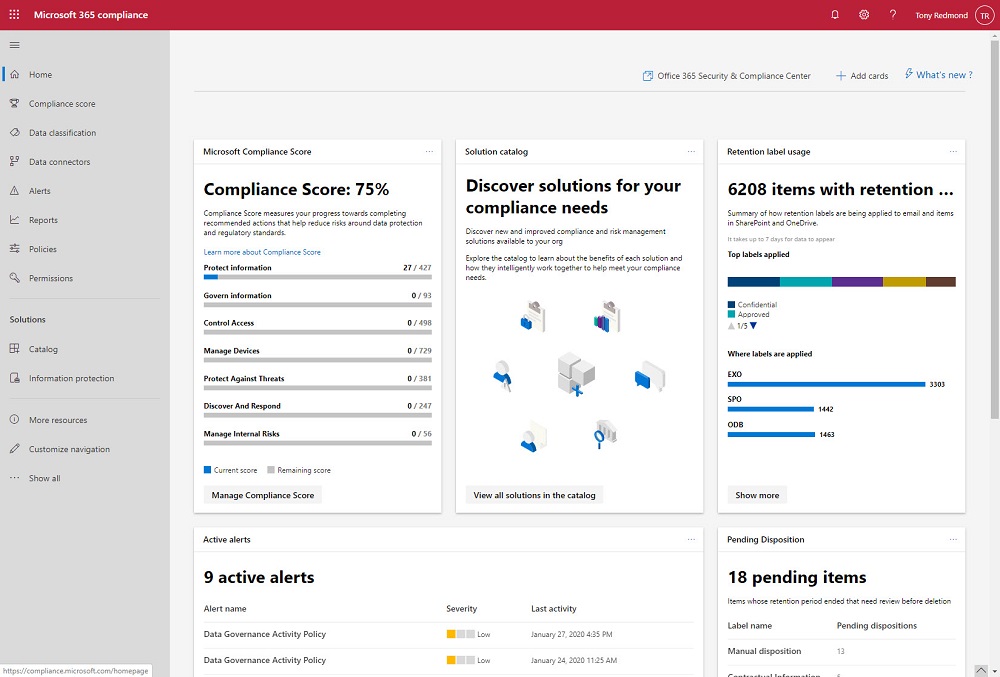
The Microsoft 365 Compliance and Security centers are roling out to Office 365 tenants where they’ll replace the old Security and Compliance Center over time. The new centers look fresher than the SCC, but looks can deceive and it’s much more important that the functionality exposed in the new portals work reliably all the time.
Office 365 Groups (and their underlying teams and sites) can be removed by user action or automatically through the Groups expiration policy. By examining records in the Office 365 audit log, we can track exactly when groups are soft-deleted followed by permanent removal 30 days later. All done with a few lines of PowerShell and some parsing of the audit data held in the records.
A question asked how to be notified when people delete Teams. The answer lies in the Office 365 audit log, and once we’ve found out when Teams are deleted are who deleted them, we can notifications to administrators via email or by posting to a Teams channel. The administrators can then decide if they should restore the deleted team or let it expire and be permanently deleted after 30 days.
Chrome 80 appears on February 4 complete with “SameSite” updates to close off the potential for cross-site request forgery attacks. Office 365 has many web interfaces, so Microsoft has had to do some work to prepare for Chrome 80. Microsoft says that Office 365 is prepared but customers will have to apply patches for on-premises products, once the patches are available. Or stop using Chrome. Which mightn’t be a bad thing.
Office 365 users might receive a phishing attempt to say that they’ve just been paid by a UK healthcare group. The message shows some obvious signs to tell the recipient that it only contains trouble, but these signs are easier for humans to pick up than they are for machine learning. The combination of good message hygiene and user education should be enough to deflect phishing attacks.
The Groups admin role was added to Office 365 in November 2019 to allow tenants to assign responsibility for day-to-day group management to specific users through interfaces like the Microsoft 365 Admin Center. The role is still relatively unknown and probably not used in many tenants. In this post, we discuss how to use PowerShell to assign the role to those allowed to create new groups.
In mid-February, Microsoft will roll out a change to allow Office 365 tenants in regions where the Teams and Stream services are not co-located to record Teams meetings for the first time. This might be good news for you, but it might also pose a data sovereignty issue because once you start using Stream in another region, that’s where the recordings will stay.
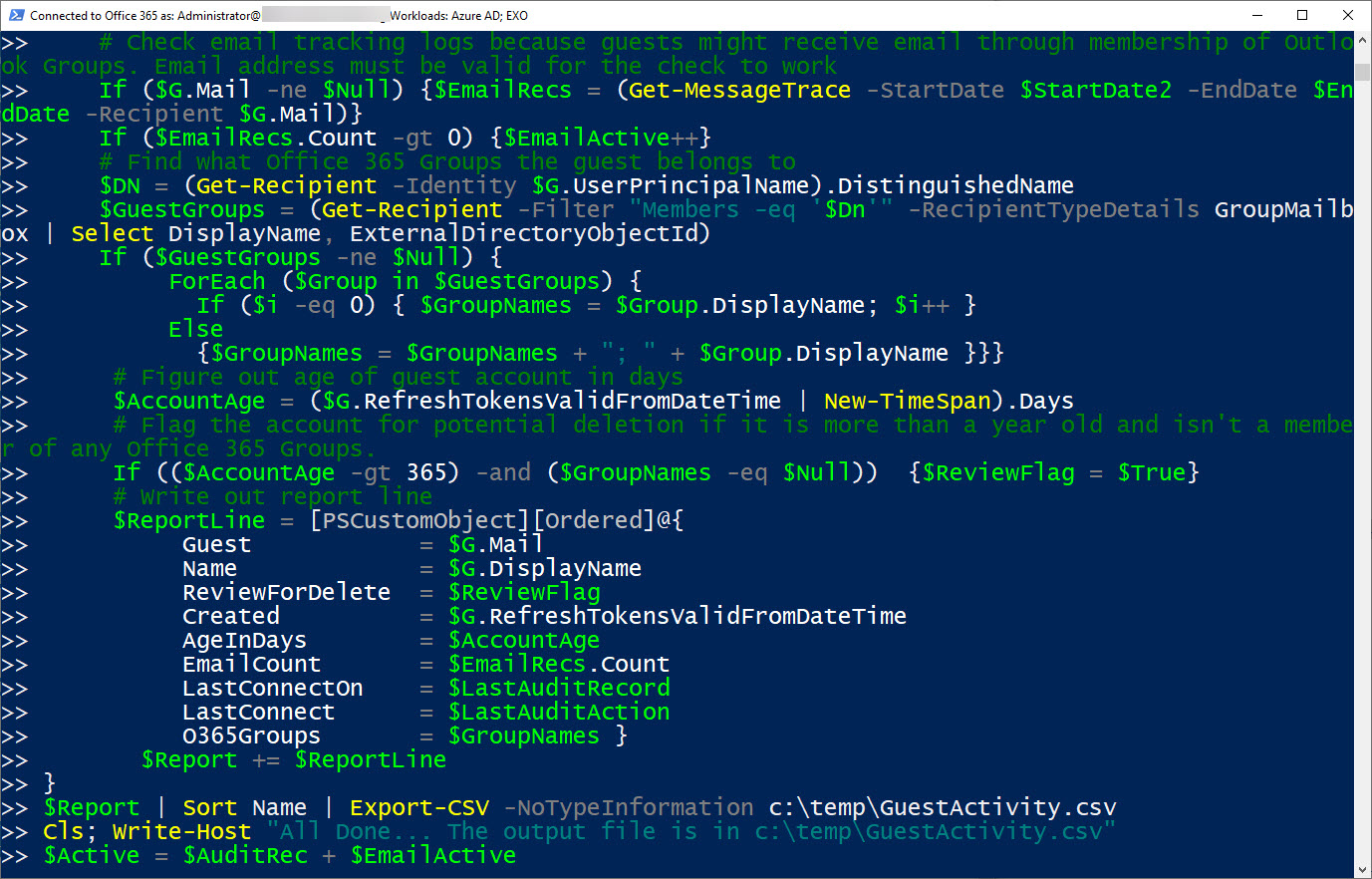
After a couple of years, it’s time to update the Office 365 Groups and Teams Activity Report script. Written in PowerShell, the script analyzes the groups in an Office 365 tenant to figure out if each group or team is in active use. Because it’s a PowerShell script, you can amend the code to your heart’s content.
In November, Microsoft set a 1TB limit for Exchange Online auto-expanding archive mailboxes. Now they’ve retreated and the latest service description says nothing about a limit. The two changes in the service featured little or no customer communications and a total lack of any supporting material, like administrative controls to help manage archive mailboxes approaching the limit. While a limit has gone for now, it will be back.
Finding it hard to keep up to date with Office 365? This post describes how to use PowerShell to post recent Microsoft 365 roadmap updates to a Teams channel.The message cards hold details of what an update contains, its status, the posting date, and the technology categories the item covers. Apart from posting to Teams, the script also creates a CSV file holding details of all the roadmap items that you can use for reporting and analysis.
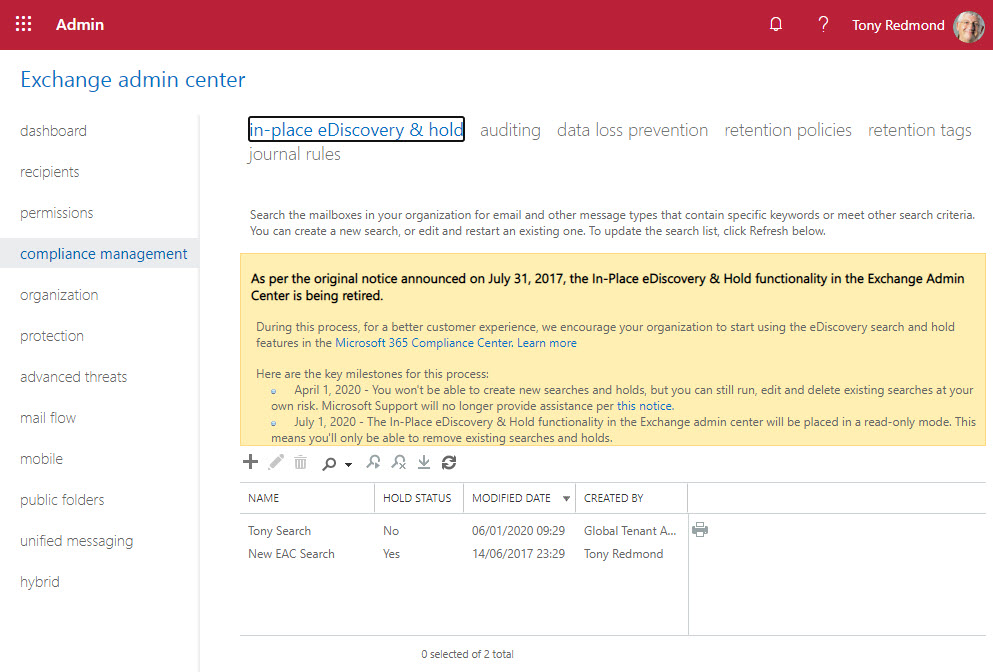
Microsoft announced the retirement of legacy eDiscovery tools from Office 365. The Exchange Online in-place holds and eDiscovery tool, Office 365 Advanced eDiscovery 1, and the Search-Mailbox cmdlet are being retired. All will be gone by mid-2020. It’s a pity to see the Search-Mailbox cmdlet being removed, but time and progress make this kind of thing inevitable.
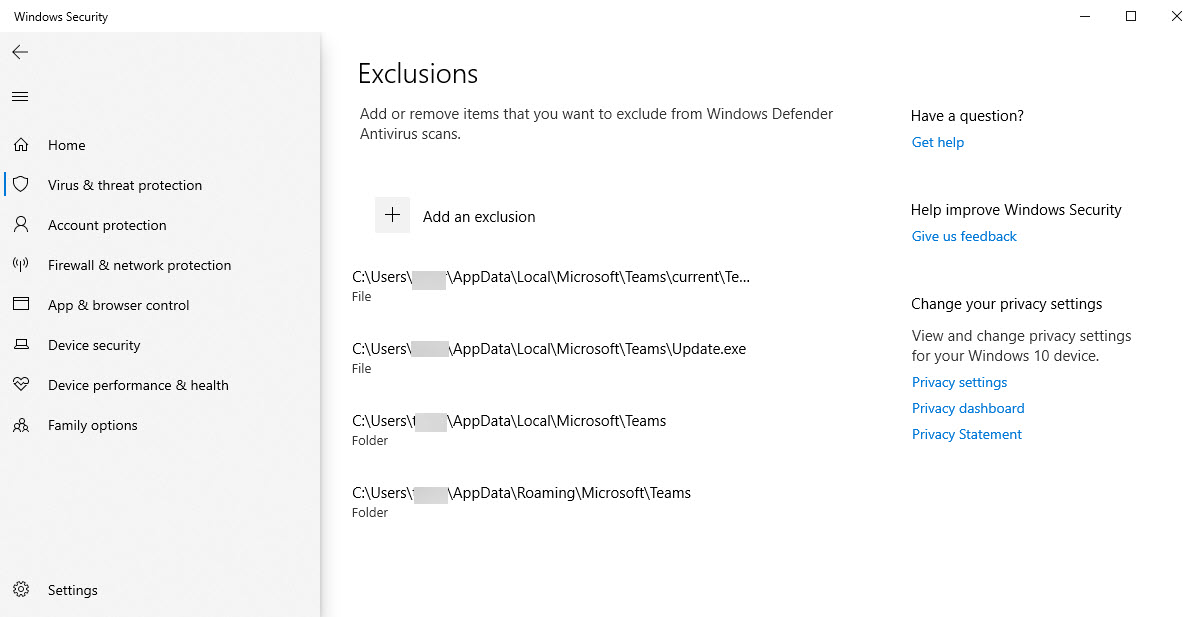
Like all applications, the Microsoft Teams client has some “hot” files that the app depends on. Antivirus software processing can affect app performance if it conflicts with the hot files. You can exclude the Teams hot files from antivirus processing to see if that helps performance. Like anything to do with antivirus software, it’s a question of balancing security and performance.
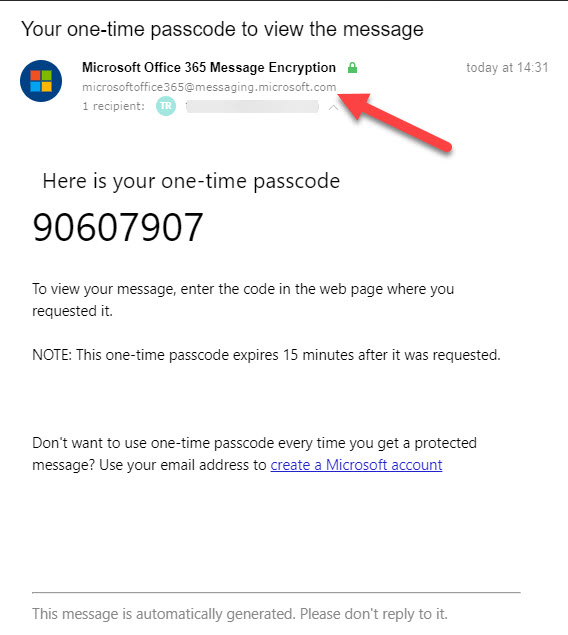
Microsoft is releasing some updates to Office 365 Message Encryption (OME) in January. The detail in the announcement wasn’t great, so we plunged in to find out what’s happening. THe bottom line is that OME will use tenant domains to send email so that anti-spam filters will consider the messages to be authentic.
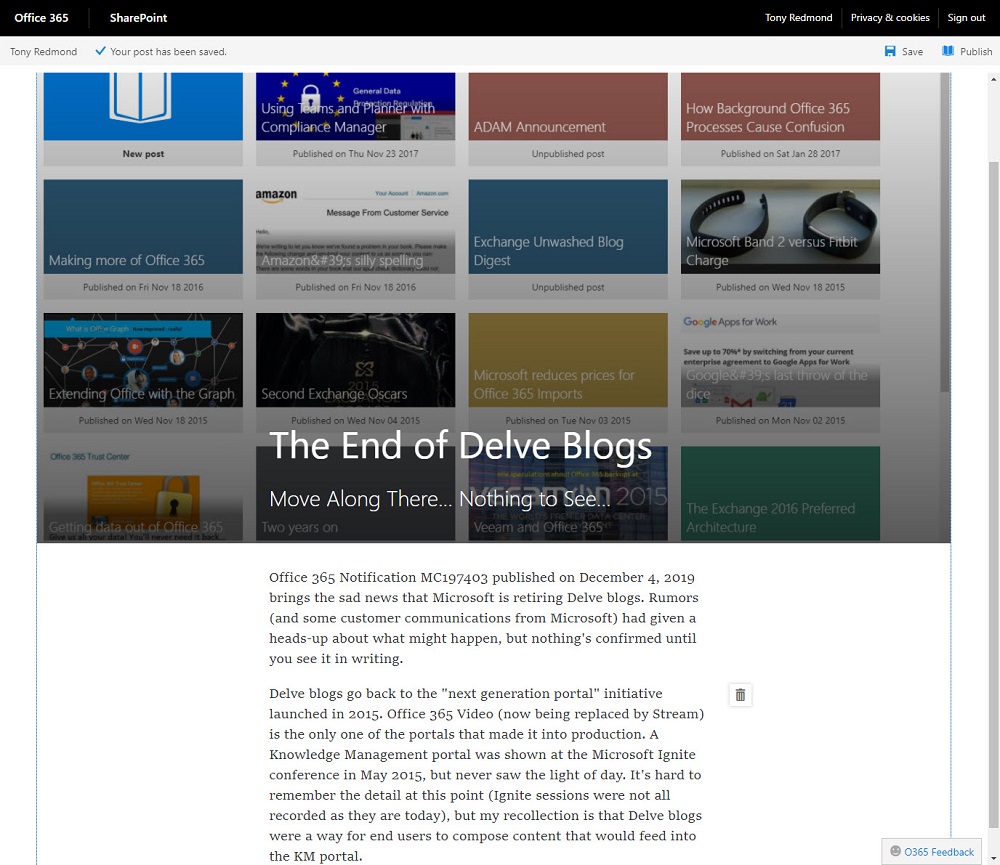
Microsoft has announced that Delve blogs will no longer be supported in 2020. The news is unsurprising because Delve blogs have not been actively developed for several years. Office 365 tenants with content in Delve blogs must figure out where to move the content to. It might be the case that you don’t need to do anything because the content isn’t needed. If you do need to keep it, you could move Delve blog posts to SharePoint news or similar repositories.
Office 365 services are now available in Switzerland from Microsoft’s datacenters located in Geneva and Zurich. The services available include Exchange Online, SharePoint Online, and Teams. Swiss tenants will continue to access other services like Stream and Planner from Office 365 datacenters in other regions.
Microsoft Teams will soon offer users the chance to engage with an exploratory experience to see what Teams is all about. The new experience replaces the previous 1-year trial offer. Office 365 tenant admins who don’t want users to test software can disable the ability to sign up for trial apps and services in the Office 365 Admin Center.
The Office 365 Admin Center is a critical tool for tenant admins. Recently, Microsoft has improved the management of role assignments by providing a way to compare what different roles can do. The idea is that if you know exactly what a role enables people to do, you’re less likely to assign the wrong role to the wrong people.
The Get-SPOSite PowerShell cmdlet is used to fetch details about SharePoint Online sites. It works well, but some recent functionality upgrades means that script writers need to be more precise about how they use the cmdlet. Most scripts don’t need to process redirect sites or the sites belonging to Teams private channels, so why would you ask Get-SPOSite to fetch these sites?
Everyone’s PowerShell style is different. Here at Office365ITPros, we try and write code to help people understand what’s possible when working with Office 365. Our scripts are certainly not up to professional standard in that they’re incomplete in many ways (comments are always good). But the code works and proves what you can do, which we think is important.
You can use PowerShell to configure a customized per-site Anyone sharing link period for different sites. Public sites might have a 365 day period while more confidential sites might have a more restricted period. All it takes is the Set-SPOSite cmdlet to set the necessary properties and you have a customized policy.
Office 365 is a complex place and service incidents happen all the time. When something breaks, it’s good to know what those problems are. A new feature in the Office 365 Admin Cemter enables you to get email notifications for service incidents that affect your tenant. It’s all goodness, as long as the email service you choose to receive notifications remains in operation.
Multiple PowerShell modules are available to Office 365 administrators to automate common processes. In this case, we want to send a welcome message to new accounts. Three PowerShell modules are available, but what’s the best in terms of performance and ease of use? There’s only one answer and that’s Exchange Online.
The Microsoft Immersive Reader exists to make messages more readable for those who need a little help. It’s built into Office apps like Teams and OWA. Most people don’t know this or don’t need to use the reader, but those who do need support to access and understand text will find the Immersive Reader very helpful.
The prospect of allowing user-controlled purchases of Power Platform apps in an Office 365 tenant maddened many administrators. Microsoft promised to release a method to allow administrators control self-service purchases in a tenant. The MSCommerce PowerShell module is now available. Here’s how to use it to disable self-service purchases.
Some new and updated cmdlets in a new version of the Teams PowerShell module are available to support private channels. The cmdlets and parameters are pretty straightforward for anyone used to working with Teams through PowerShell. Remember to read up and understand all about private channels before trying to work with them through PowerShell.
ORCA is a project to help Office 365 tenant administrators validate their anti-spam and anti-malware settings against recommendations from Microsoft. ORCA is installed as a PowerShell module with just one cmdlet. After running Get-ORCAReport, you’ll have a report containing recommendations and observations about your configuration.
At the Microsoft Ignite 2019 conference, Microsoft described how SharePoint Online will use Office 365 compliance features such as sensitivity labels and information barrier policies to better protect information stored in SharePoint sites. The Office Online apps also gain support for sensitivity labels. The new features will enter a mixture of public and private previews starting November 20.
Microsoft annoyed many Office 365 tenant administrators when they announced plans to allow self-service purchases for the Power Platform apps. A curious note in the FAQ might reveal how tenants can block this feature. If self-services purchases depend on accessing your tenant directory, maybe you can disable the service principal that holds the role enabling that access.
Azure Active Directory now features the public preview of the My Sign-Ins feature, which allows users to see where their sign-ins originate and what applications are used to sign-in. It’s a nice idea but Office 365 users are unlikely to find the page. We can help by creating a custom tile with a link to the My Sign-Ins page. The tile appears in the Office 365 apps menu and makes it easy for people to access their sign-in data.
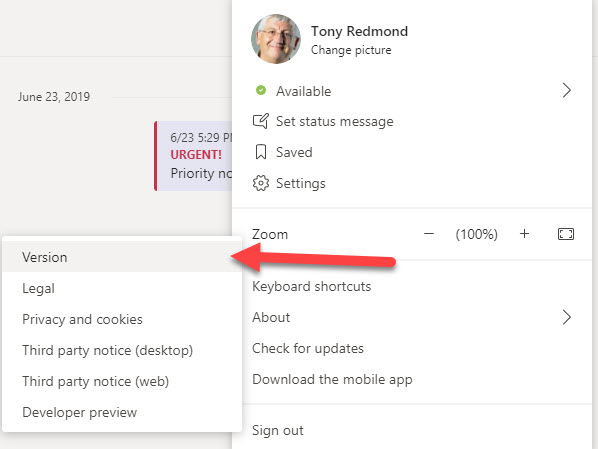
In an Office 365 notification to tenants, Microsoft says that the Modern Lifecycle Policy means that users must keep the Teams desktop up-to-date. The result is that users must make sure that their desktop client is no more than three months behind the latest software. If it is, they won’t be able to use the desktop client until it is updated.
The Office 365 Admin Center includes reports of licenses assigned to users. The same information can be extracted with PowerShell, which means that you can analyze license assignments anyway you wish. The script is quick and easy, mostly because its error handling is non-existent, but it’s enough to get going.
The fight against spam and malware goes on unabated. ZAP, or zero-hour auto purge, is an Exchange Online Protection (EOP) feature that’s getting some extra features to deal better with spam and phish malware. New policy controls are available to control the feature.
The Microsoft Graph gives programmers a RESTful interface to Office 365 data. Flow allows even non-programmers to automate tasks by combining building blocks of Office 365 data and actions. Put the two together and you can generate some impressive results. In this example, we combine Graph and Flow to create some nagging emails to admins to encourage them to improve the tenant’s Secure Score.
Some Exchange Online mailboxes are quite small (2 GB for frontline users). Tenant administrators might want to monitor mailbox usage to make sure that quotas aren’t unexpectedly exhausted. This post explains how to use a PowerShell script to calculate the percentage of mailbox quota used and highlight the problem if a threshold is passed.
The Office 365 E5 plan includes Advanced Threat Protection (ATP), which builds on the anti-malware capabilities of Exchange Online Protection. ATP the includes Safe Attachments and Safe Links features, both of which can delay email delivery. I don’t notice the delay but others do. In any case, the more protection you have against malware, the better.
If you want to include SharePoint Online and OneDrive for Business locations in an Office 365 content search, you need to know the URLs of the target sites. Finding the URLs can be problematic, but here’s some easy ways to do the job. PowerShell, as usual, comes up trumps…
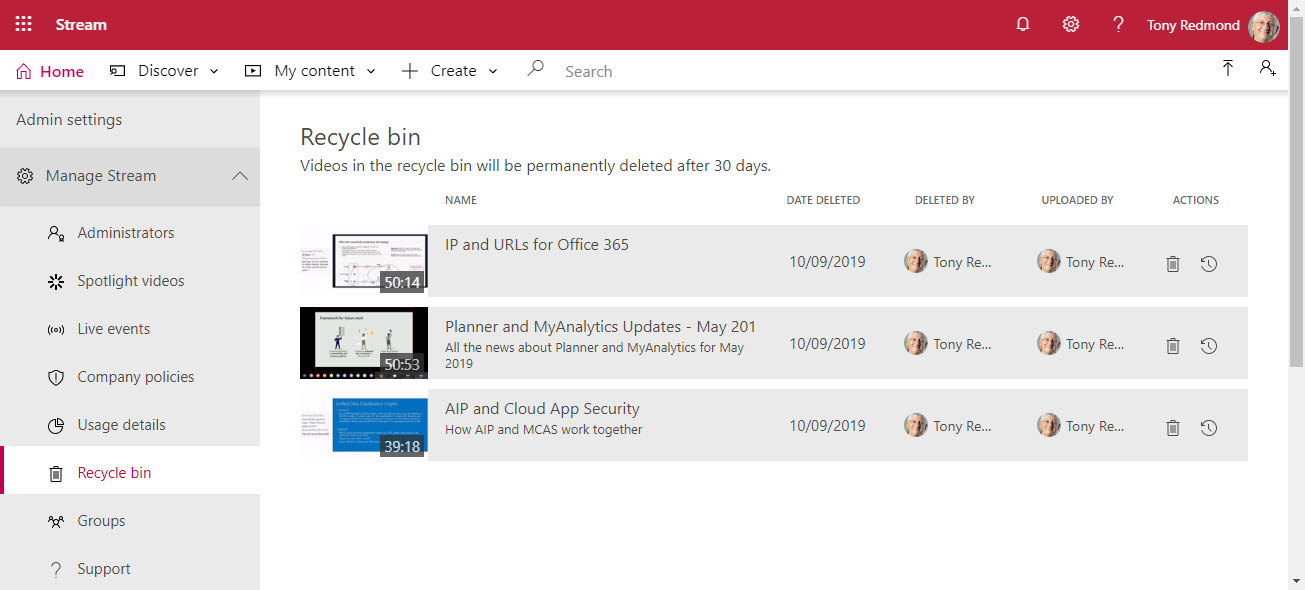
The Stream video service now boasts a recycle bin to allow Office 365 users 30 days to restore deleted videos. Stream administrators can access and restore videos deleted by anyone in a tenant. And, if necessary, users can permanently remove deleted videos before the 30-day retention period expires.
The topic of Teams tenant-to-tenant migration generated a lot of reaction after an article published last week. This lead to a chat with AvePoint, who have a product similar to BitTitan. What was interesting is that AvePoint use the same API to backup Teams. Although the backup isn’t as functional as you want and definitely not designed for backups, you do end up with data backed up that can be restored. The solution is imperfect, but it is available now.