OWA now supports Office 365 Sensitivity Labels, which means that users can apply labels to mark and/or protect messages with encryption just like they can with Outlook. The update adds to the ways that sensitivity labels can be applied to Office 365 content, with the next step being to achieve the same support for the other online Office apps.
The Microsoft Graph gives programmers a RESTful interface to Office 365 data. Flow allows even non-programmers to automate tasks by combining building blocks of Office 365 data and actions. Put the two together and you can generate some impressive results. In this example, we combine Graph and Flow to create some nagging emails to admins to encourage them to improve the tenant’s Secure Score.
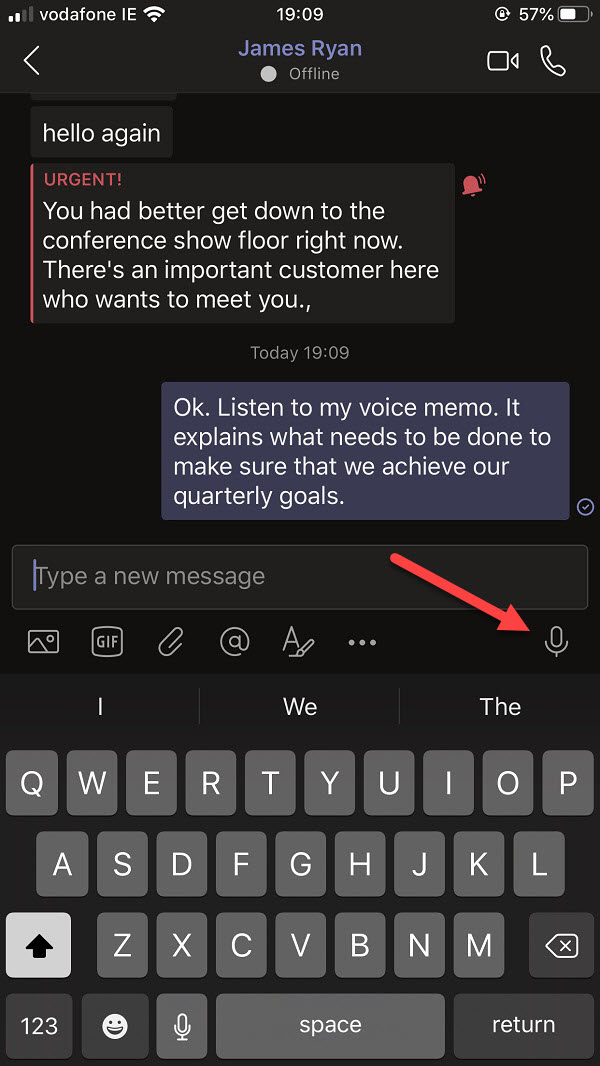
The Teams mobile clients allow users to record and send voice memos in personal and group chats. It’s nice functionality, but from a compliance standpoint some glaring weaknesses exist in the way that Office 365 captures compliance records for these memos. No voice recognition, no metadata, nothing to search for. It’s a compliance mess that Microsoft needs to clean up.
The October 2019 updates are now available for the Office 365 for IT Pros eBook.19 out of the 24 content chapters were updated in this cycle, proving once again that ePublishing is the only way to cover ever-changing cloud services like Office 365. Add in Azure Active Directory and other Azure services and it’s easy to see why we all swim in a sea of cloud-charged changes. Subscribers can download updated book files from Gumroad.com or Amazon, depending on the format they bought.
Some Exchange Online mailboxes are quite small (2 GB for frontline users). Tenant administrators might want to monitor mailbox usage to make sure that quotas aren’t unexpectedly exhausted. This post explains how to use a PowerShell script to calculate the percentage of mailbox quota used and highlight the problem if a threshold is passed.
The ability for a Teams user to contriol the notifications they see for channel conversations is being expanded with a new option to mute specific conversations. This is useful when you’ve contributed to a conversation that becomes very chatty and floods your activity feed with updates. Direct @mentions and reactions to your replies still get notified even when a conversation is muted.
You can configure Send As and Send on Behalf of permissions to allow Exchange Online users to send messages for an Office 365 Group. All is well if the messages arrive, but if they don’t, the NDRs might not get to where you think they should go, such as a folder in the Recoverable Items structure. That’s OK if the sender was told that a problem exists with a message, but they don’t know anything happened.
Office 365 makes extensive use of Azure Active Directory guest accounts. Implementing a risky sign-in policy is a good idea, but it can have the unfortunate side-effect of suddenly blocking guest accounts that could previously access tenant resources. If blocks happen, they can only be lifted through administrative intervention in the guest account’s home tenant.
The Office 365 E5 plan includes Advanced Threat Protection (ATP), which builds on the anti-malware capabilities of Exchange Online Protection. ATP the includes Safe Attachments and Safe Links features, both of which can delay email delivery. I don’t notice the delay but others do. In any case, the more protection you have against malware, the better.
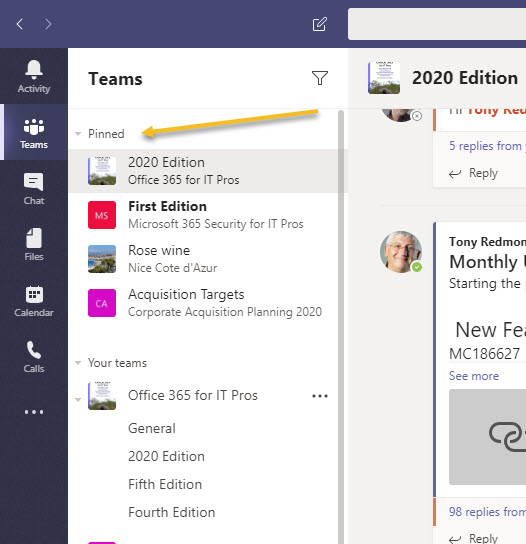
Microsoft Teams now supports the ability for users to pin their most important channels to the top of the teams list in the desktop and browser clients. Pinning channels is a good way of tracking what’s happening in critical channels, especially when you belong to some chatty channels whose conversations might swamp your activity feed.
Microsoft has announced that basic authentication for multiple email connection protocols won’t be supported after October 13, 2020. You won’t be able to connect with EWS, EAS, IMAP4, POP3, or Remote PowerShell unless you use modern authentication. There’s just over a year to prepare, but there’s some work to be done.
Microsoft is now rolling out MyAnalytics access to Office 365 accounts with an Exchange Online license.The first sign that anyone gets is when they receive one of MyAnalytics’s well-intended messages to help them organize their work life smarter. Funnily enough, some people don’t like the idea of Office 365 analyzing and reporting their work habits, which is why you might need to disable MyAnalytics for some mailboxes.
Microsoft has confirmed that disconnected Exchange Online mailboxes are not included in the sources scanned by Office 365 content searches, thus clearing up some misunderstandings that might have existed in the field. The bottom line is that if you want to search mailboxes that don’t belong to accounts, you should use inactive mailboxes.
If you want to include SharePoint Online and OneDrive for Business locations in an Office 365 content search, you need to know the URLs of the target sites. Finding the URLs can be problematic, but here’s some easy ways to do the job. PowerShell, as usual, comes up trumps…
Exchange Online allows users to add personal retention tags to their maiboxes through OWA settings. Some organizations don’t like this, so they can deploy user role assignment policies to block the feature. It;s something that you could consider doing if you’re preparing to switchover to Office 365 retention policies to impose the same retention regime across multiple workloads.
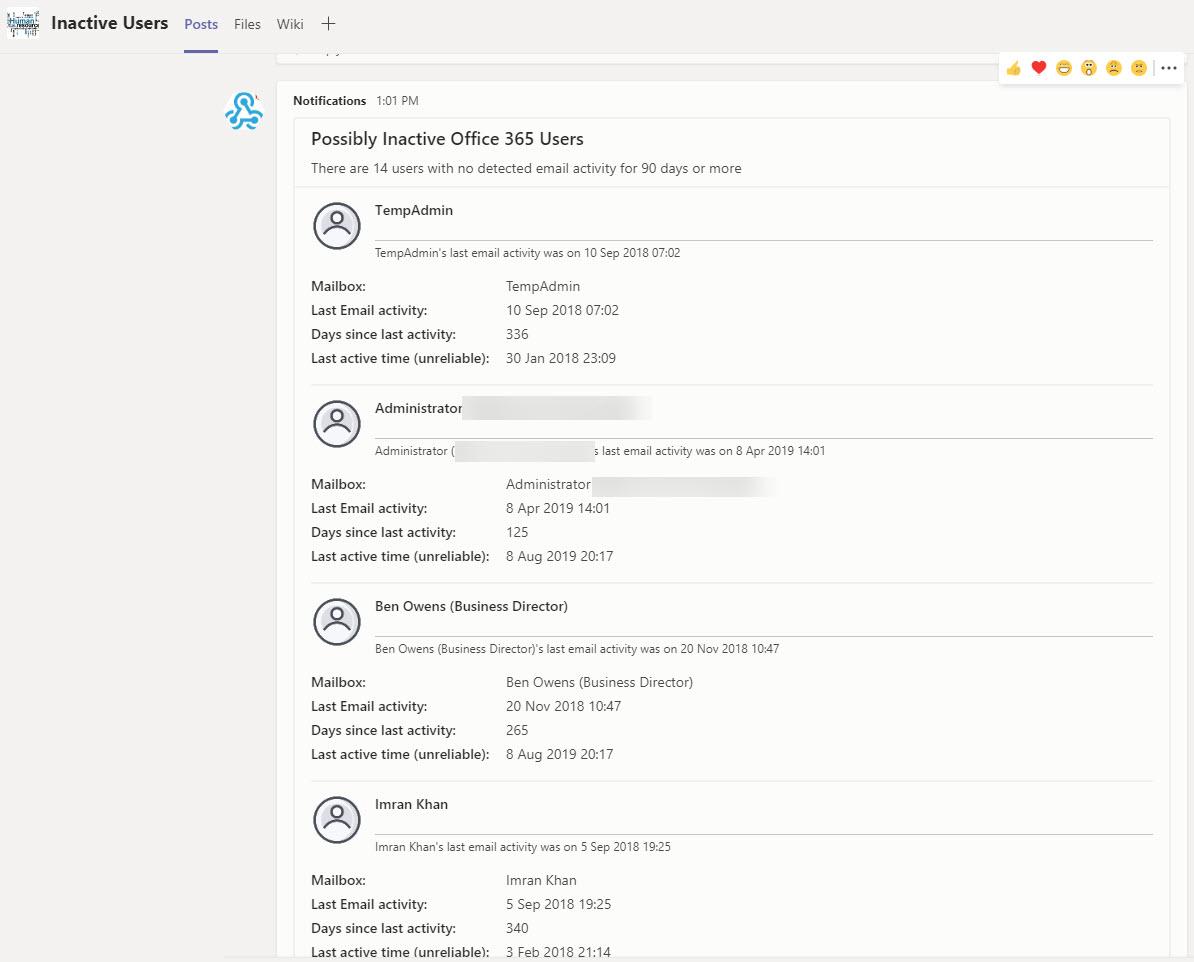
Being able to generate a report of mailbox activity is nice, but being able to filter the report to find potentially inactive mailboxes and post that information to Teams is even better. A recent Petri.com article explains how to generate the report; in this post we explain how to extract information from the report to and post updates about inactive users to Teams.
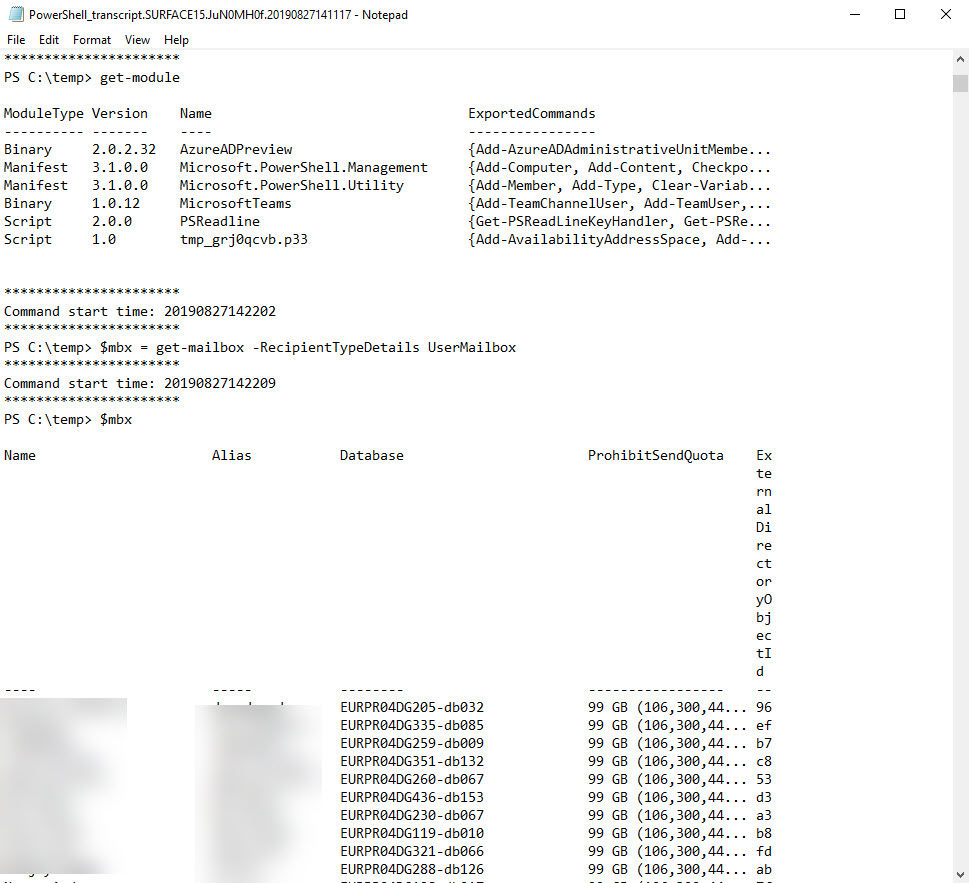
Office 365 tenant administrators often make extensive use of PowerShell. It’s a great tool to get work done across all the Office 365 workloads. However, hackers like PowerShell too, and it could be used to attack your tenant. If that happens, having PowerShell logs will allow you to find out exactly what the attacker did and where. With this in mind, shouldn’t you enable PowerShell logging?
A couple of weeks ago, I had the enjoyable experience of going to Charleston SC to present at the relaunched The Experts Conference (TEC). Niche Office 365 conferences seem to be quite the current trend and TEC is an excellent example of how small focused conferences are good to attend. You should consider it in 2021, which is the next time that TEC comes around.
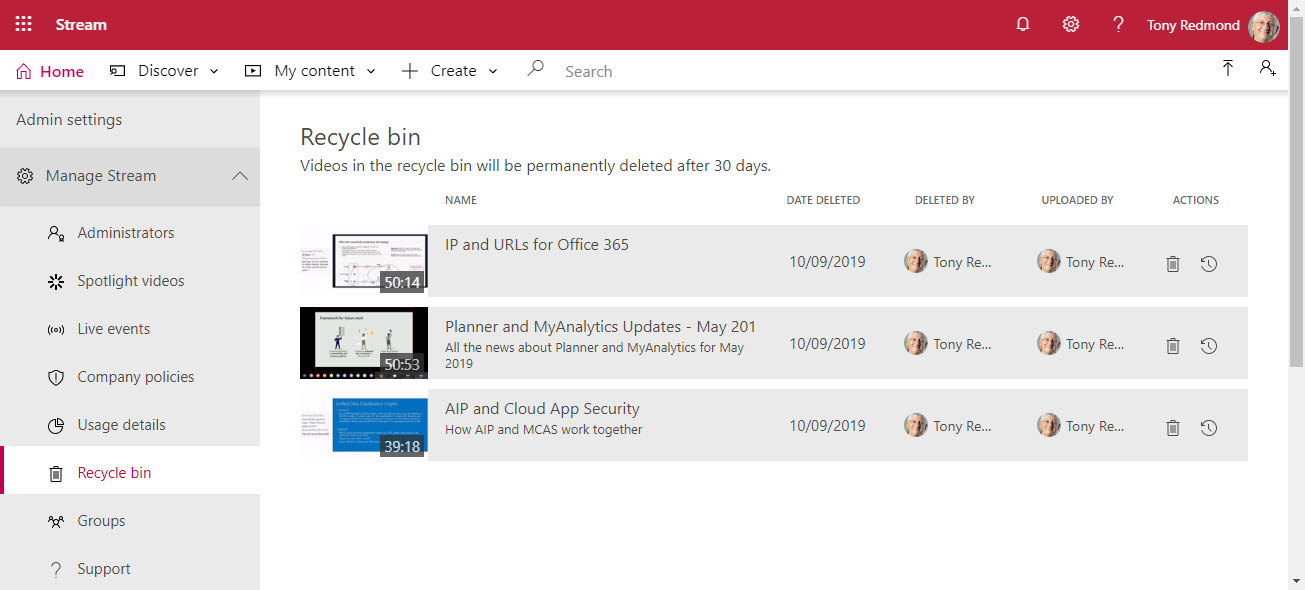
The Stream video service now boasts a recycle bin to allow Office 365 users 30 days to restore deleted videos. Stream administrators can access and restore videos deleted by anyone in a tenant. And, if necessary, users can permanently remove deleted videos before the 30-day retention period expires.
Planner, the task management app built into Office 365, has been upgraded to support a priority field for tasks. By itself, that’s not very exciting, but the new Group by Priority view is pretty good and makes it easy to move tasks within priorities in a plan. It just goes to prove that how a new feature is implemented is equally important to the existence of the new feature.
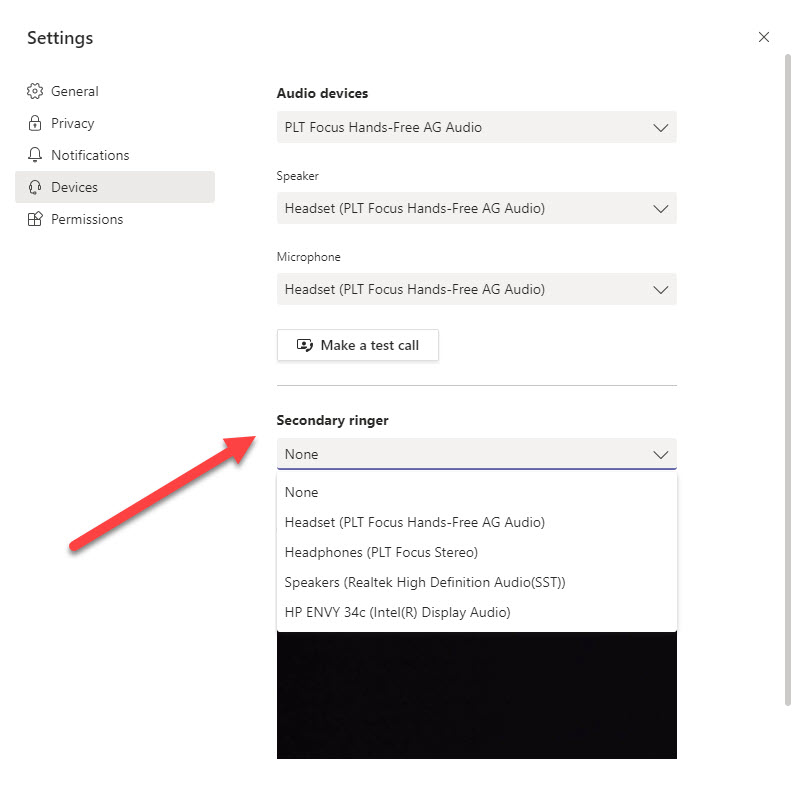
Microsoft is rolling out the ability for Teams clients to define a secondary ringer for inbound voice calls. The new feature will start appearing in Office 365 tenants from mid-September and the roll-out will complete in mid-October. Having the ability to signal inbound calls on multiple devices is a big thing for some organizations; in others, people don’t know about secondary ringers and the new feature will pass by without any notice.
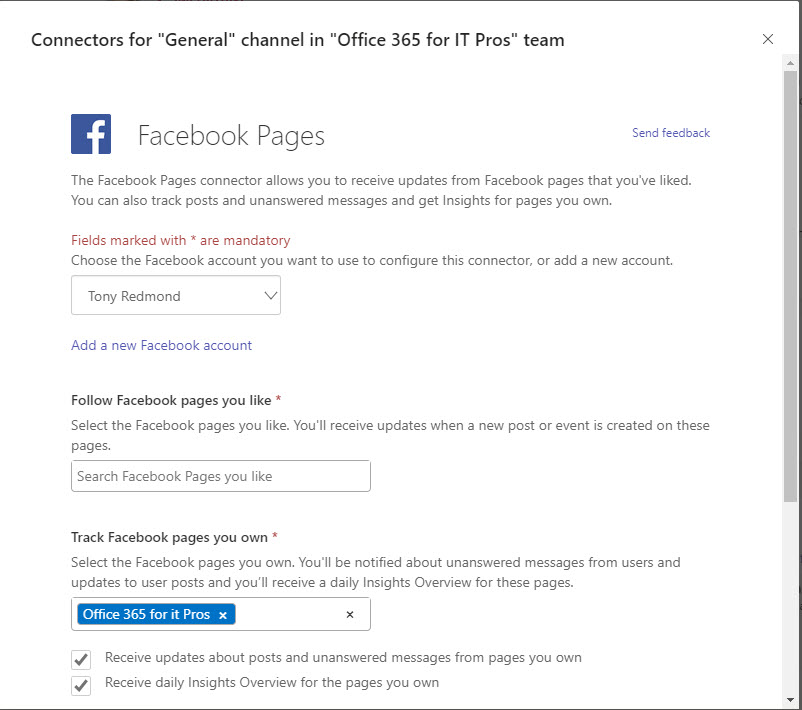
Office 365 Connectors are used to bring information from network sources into Office 365 Groups, Teams, and other apps. Microsoft retired the Facebook connector on September 4, so that’s one network source that won’t be used as a conversation starter in the future. Microsoft’s telemetry says that the Facebook connector isn’t used much, except by us (of course).
Steve Goodman of Practical365.com ran the rule over the September 2019 update of the Office 365 for IT Pros eBook and reviews what he found. He also interviewed Tony about how the book is produced and howthe chapter authors track the changes that happen all the time inside Office 365.
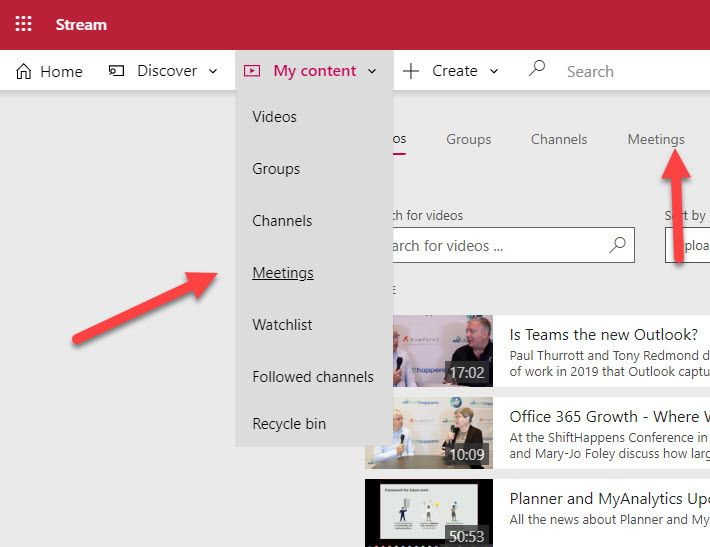
Stream now boasts fast access to the video files captured for recordings of Teams meetings. This is a good step because it can be hard to find a specific recording among a mass of other videos. At least, it can be if you manage many videos, which perhaps isn’t the case for the average Office 365 user.
The new Teams Calendar app gets a new feature called Meet Now to create on-demand or ad-hoc meetings that don’t need to be scheduled in anyone’s calendar. There doesn’t seem to be any reason not to allow users to use Meet Now, but if you need to block the feature, you can edit a Teams meeting policy and assign it to the unfortunate users.
The September 2019 update for the Office 365 for IT Pros eBook is now available for subscribers to download from Gumroad.com (PDF and EPUB) and Amazon (Kindle). We updated 17 of the 24 content chapters in this release. There are many small updates dotted across the book. Office 365 keeps on changing!
Deploying new features to a massive 100-million plus user community takes a lot of planning and careful management. Outlook Mobile caters for both consumer and commercial users, and different methods are used to deliver new features to the two groups. Sometimes this means that different users in the same tenant can’t access a new feature even if they have the right software.
Outlook mobile users now have shared mailbox support in both iOS and Android platforms. The work to upgrade the backend service is also progressing and is past 50% rollout. And dark mode is coming too. It’s available in beta today to Testflight users (only for iOS), and it’s also been enabled for some users who run the latest version of the clients.
The Outlook Places service is used by Outlook clients to present metadata about meeting locations to users. Currently, OWA is the only client that consumes the service. You can update location metadata with details to make it easier for users to select the right location for their meeting, including geocoordinates that can be used to display map directions to the location.
Teams is now included in Office ProPlus installations for Office 365 users. However, not everyone wants or needs to use Teams. Here’s how to stop Teams being installed or starting automatically each time a PC boots. You don’t need this information if you’re one of the 19 million people who use Teams, but you might just not be in that category…
Microsoft Teams is getting a new calendar app to replace the cheap-and-cheerful meetings apps used up to now. Although the calendar app boasts new views and actions, it’s not the same or as powerful as the Outlook calendar. That being said, for many people, the new Teams calendar will be quite sufficient.
Users of the Office ProPlus semi-annual channel will soon see that save to cloud locations is now the default. Microsoft hopes that this will result in more files being saved in SharePoint Online and OneDrive for Business. Whether the change will make any difference to a user depends on how they use Office and where they save files. In general, it’s just another step forwards to move everything to the cloud.
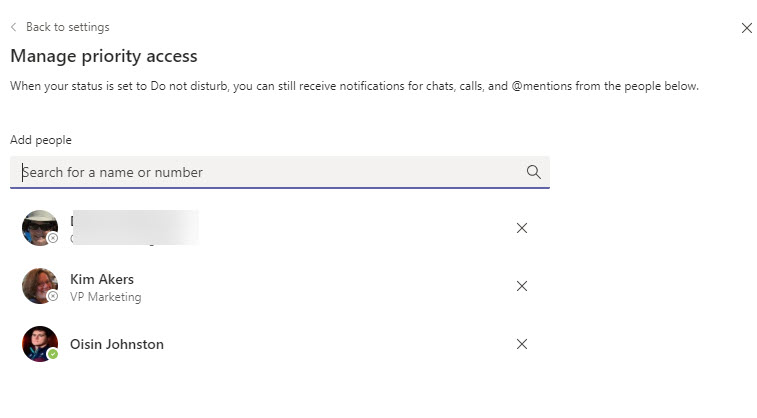
No one likes to be disturbed when they’re concentrating on something important, which is why Teams has a Do Not Disturb presence. But we all have people who are important to us, and that’s why the priority access list exists. Even when you’ve set Do Not Disturb, notifications from people on the priority access list get through. The notifications might break your concentration, but they might also tell you about something important (or not, as the case might be).
Outlook people favorites give Exchange Online users fast access to their most important email correspondents. OWA has the best implementation but the feature is also available in Outlook mobile. As usual, Outlook desktop lags. It’s a small feature that could turn out to be very important to some users. Office 365 is full of such examples.
Outlook for Office 365 (the click to run version) now supports the Office Black theme. Preferring to use dark Outlook is very much a personal choice. I’m not convinced that I like it, even if you can force the message reading pane to be in light mode.
The topic of Teams tenant-to-tenant migration generated a lot of reaction after an article published last week. This lead to a chat with AvePoint, who have a product similar to BitTitan. What was interesting is that AvePoint use the same API to backup Teams. Although the backup isn’t as functional as you want and definitely not designed for backups, you do end up with data backed up that can be restored. The solution is imperfect, but it is available now.
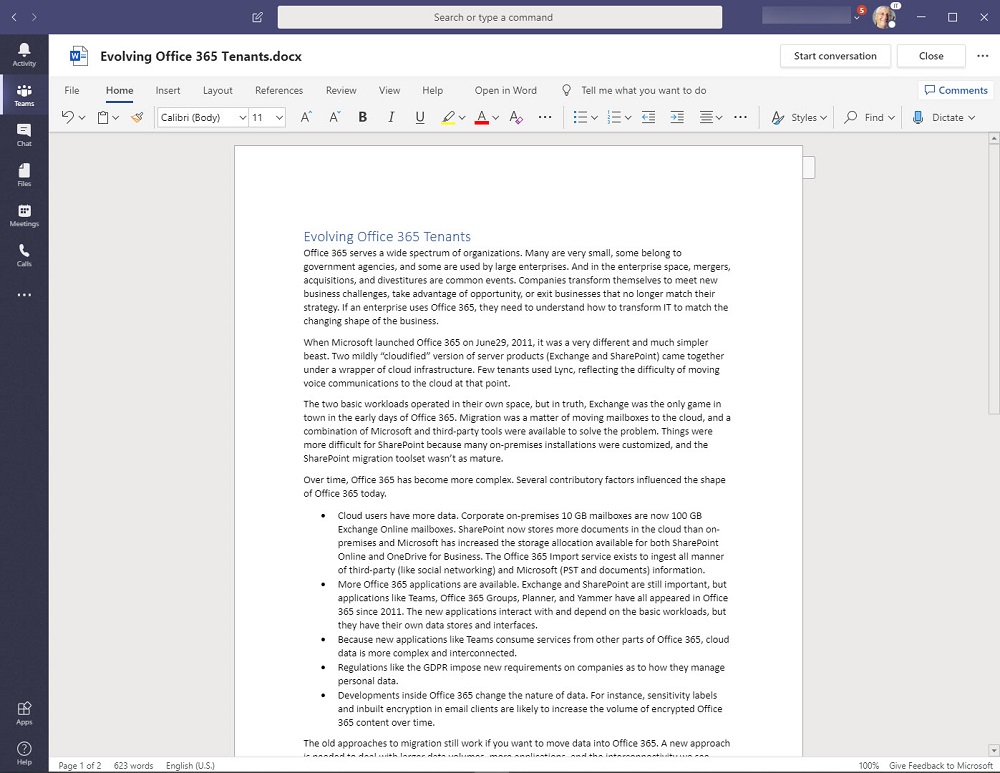
Microsoft has released new OneDrive file viewers that are turning up in Teams clients. The new viewers are more intelligent and make it easier to work with files, especially Office documents. However, even intelligent viewers can only function when a solid network connection is available and often a local synchronized copy of Teams files is the way to work.
It’s easy to create a list of group-enabled SharePoint Online sites using the Get-SPOSite cmdlet. But it’s much more interesting to probe a little deeper to uncover extra information about the group using the GroupId property returned if you specify the Detailed parameter. This post explains a PowerShell script written to examine the possibilities, including how to highlight sites belonging to deleted groups that are kept by retention policies.
Outlook 2013 introduced the concept of hybrid mode (sometimes called Exchange Fast Access) to allow clients configured in cached Exchange mode to fetch data direct from the server when possible. The mode works well, except when you’re connected on a poor network as the attempts to fetch data from the server might cause Outlook to hang. A registry setting gives a way to force Outlook to operate in classic cached mode and use the OST exclusively when it needs data.
Microsoft Cloud App Security (MCAS) can integrate with Azure Information Protection to allow automated policy-driven application of Office 365 sensitivity labels to Office documents and PDFs. You can depend on users to apply labels manually as they create documents, but it’s easy for humans to forget to add protection where a computer won’t. You’ll pay extra for MCAS, but it could be worthwhile.